← Steve Jobs

Design

11 entries, with sources

01

Reed College Calligraphy Course

Lloyd Reynolds (and successor Robert Palladino)·1973–1974

Jobs audited Reynolds' calligraphy course at Reed College after dropping out of formal enrollment, learning about serif and sans-serif letterforms, letter spacing, and proportion. He later said directly that without this course the Macintosh would never have offered multiple typefaces and proportionally spaced fonts, making it one of the few educational experiences he explicitly credited with shaping a specific design decision in his own products.

Reed College's own calligraphy archive cites a Smithsonian interview in which Jobs describes auditing Reynolds' class, learning about typefaces and letter spacing, and states in his own words that this training directly led to the Macintosh's multiple fonts and proportional spacing.
02

NeXT Logo

Paul Rand·1986

Jobs paid Paul Rand 100,000 dollars to design the NeXT identity and, in his own recorded words, praised Rand specifically for refusing to present multiple options and instead delivering one fully reasoned solution — the tilted wordmark on a black cube — calling him one of the greatest problem solvers and graphic designers he had worked with. This is a rare instance of Jobs articulating, on camera, exactly what he valued in a designer's process.

Documentation of the NeXT identity project records the 100,000-dollar commission and the resulting brand system, including the cube's 28-degree tilt. Video interviews archived on Paul Rand's official site capture Jobs in 1993 describing the collaboration and explicitly praising Rand's single-solution approach.

03

Bösendorfer Grand Piano

Bösendorfer·c. early 1980s

Jobs personally bought a Bösendorfer grand piano, costing roughly 75,000–80,000 dollars, and placed it in the Macintosh team's building purely as an object of inspiration and craftsmanship, despite not playing it himself. He later parked it alongside his BMW motorcycle in the Bandley 3 lobby specifically as an example of the standard of design and manufacture he wanted employees and visiting designers to measure Apple's own products against.

Bruce Tognazzini's firsthand recollection describes Jobs personally purchasing the Bösendorfer at that specific price and placing it for the Mac team's use during development. Andy Hertzfeld's account of the Bandley 3 lobby, as a colleague present at the time, describes Jobs curating the piano alongside a motorcycle explicitly as an example of great product design.

04

BMW R60/2

BMW Motorrad·1966

Jobs rode a 1966 BMW R60/2 around Silicon Valley in the early 1980s, photographed for a National Geographic profile visiting friends to drink wine and talk about the future. When its clutch cable broke and he lost interest in riding it, rather than repairing or discarding it he had it moved into Apple's Bandley 3 lobby next to the Bösendorfer piano as a static example of great design — reportedly also intended to impress the German designer Hartmut Esslinger, whom he was courting for Apple.

A 1982 National Geographic photograph documents Jobs riding the motorcycle, and Andy Hertzfeld's firsthand account of the Bandley 3 lobby, corroborated by colleague Bryan Stearns' explanation of the broken clutch cable, describes Jobs deliberately displaying the non-functioning bike as an example of great product design.

05
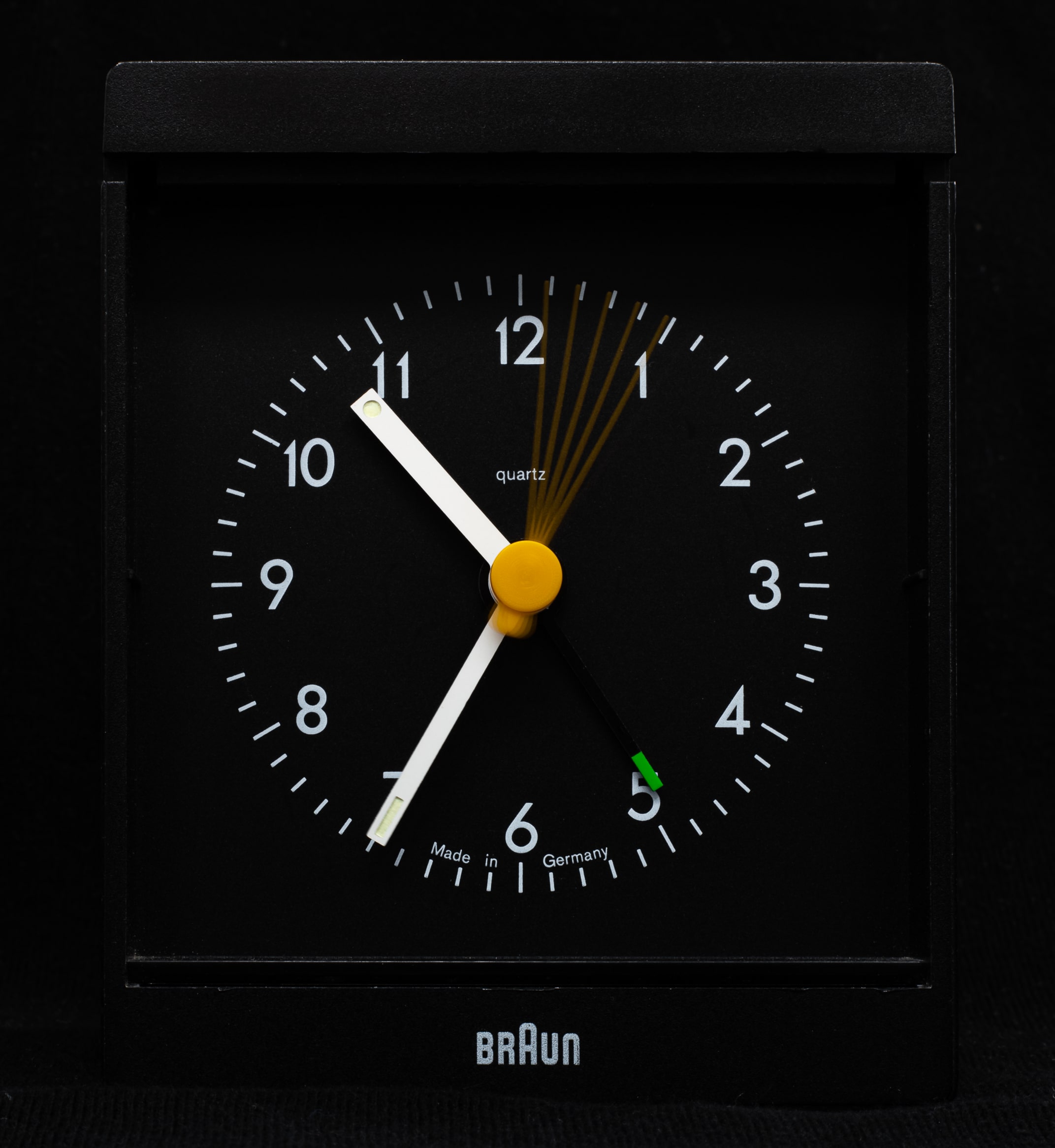
Braun ET66
Wikimedia Commons

Braun ET66

Dieter Rams and Dietrich Lubs for Braun·1987

A design retailer specializing in Braun objects states that Jobs and Jony Ive were both admirers of Braun's work and Rams' 'less but better' philosophy, and that Apple's iPhone calculator interface is a direct homage to the ET66's layout of circular keys and restrained colour accents. This makes the ET66 a concrete, traceable link between an object Jobs cited as a reference and a specific shipped Apple design.

A German design retailer's product description of the Braun ET66 explicitly states that Jobs and Ive were fans of Braun and Rams, and that the iPhone calculator's look pays homage to this specific calculator's design.

06

Michell GyroDec

Michell Engineering·in use c. 1982

The turntable visible behind Jobs in Diana Walker's 1982 photograph of his nearly-empty Woodside living room was later identified by journalists as a Michell GyroDec — a turntable known for its exposed suspended platter, brass weights, and visible mechanism rather than a concealed motor. Its presence, in a room stripped of almost all other furniture, marks it as one of the few objects Jobs gave prominent physical space to.

Wired's reconstruction of the 1982 photograph identifies the turntable as an MK1 GyroDec (after some sources initially misidentified it as a Linn Sondek), and describes the whole rig as embodying the clean-lined, high-performance industrial design Jobs favored.

07

Spectral STASIS-1

Spectral Audio·in use c. 1982

Jobs' Woodside stereo system used a Spectral STASIS-1 solid-state power amplifier paired with a Spectral FET-One preamp rather than any tube-based amplification. Audiophile discussion specifically notes he never owned a tube amp or preamp, suggesting a preference for the precise, fast, minimally-styled solid-state components over the warmer, more traditionally styled alternatives many audiophiles chose instead.

Wired's identification of the components in the 1982 photograph lists the Spectral STASIS-1 and FET-One preamp, and audiophile forum analysis of the same system specifically remarks that Jobs never owned tube amplification, only modern solid-state gear.

08

Acoustat Monitor 3

Acoustat·in use c. 1982

The speakers in Jobs' Woodside system were identified as Acoustat Monitor 3 electrostatic panels — tall, flat, sculptural units using charged membranes rather than conventional cone drivers, visually dominant in an otherwise near-empty room. Their scale and presence in the 1982 photograph indicate Jobs prioritized visible, high-end audio hardware over conventional furniture in his own home.

Wired's component-by-component identification of the 1982 photograph names Acoustat Monitor 3 speakers as part of the system, corroborated by audiophile forum discussion of the same image.

09
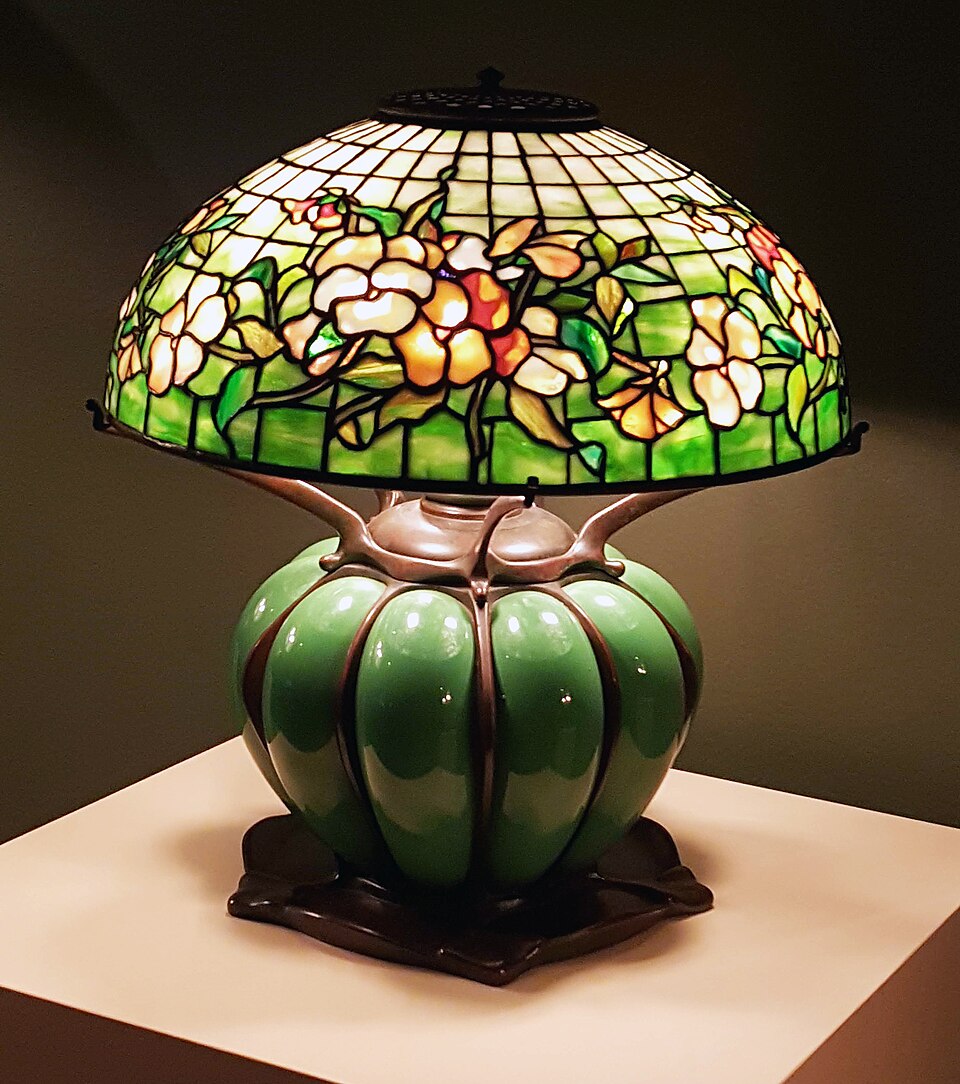
Tiffany Lamp
Tim Evanson from Cleveland Heights, Ohio, USA · CC BY-SA 2.0

Tiffany Lamp

Tiffany Studios (attributed)·in Jobs' home by 1982

In Diana Walker's 1982 photograph of Jobs sitting on the bare floor of his Woodside living room, a stained-glass Tiffany lamp is one of only a handful of objects present — alongside the stereo system and a few records — in a home he otherwise left almost entirely unfurnished for years. Its ornate, historical craftsmanship stands in deliberate contrast to the room's stripped-down modernism.

The Steve Jobs Archive republishes Diana Walker's 1982 Time photograph showing Jobs beneath the lamp in his near-empty Woodside living room, with the lamp as one of the few identifiable furnishings in frame.

10

New Balance 991

New Balance·c. late 1990s–2011

Jobs completed his personal uniform with grey New Balance 991 sneakers, favoring their subdued, technical, largely unbranded look over more overtly styled athletic footwear — keeping the lower half of his outfit visually quiet so attention stayed on the turtleneck and, on stage, on the products themselves.

Retrospective coverage of Jobs' wardrobe identifies the grey New Balance 991 as the specific sneaker he wore as part of his fixed uniform, including at the original iPhone launch keynote.

11

Wilson Audio Grand Slamm

Wilson Audio·reported later upgrade, undated

Forum-level audiophile accounts claim that Jobs later replaced his Acoustat electrostatic speakers with a Wilson Audio Grand Slamm system — a massive, extremely expensive multi-module loudspeaker — suggesting continued personal investment in top-tier audio equipment as his means grew, though this claim rests on secondhand audiophile-community reconstruction rather than a primary source.

An audiophile forum thread discussing Jobs' known stereo system mentions a later upgrade to Wilson Audio Grand Slamm speakers, without citing a primary documented source for this specific claim.