← reccs

Steve Jobs

1955–2011·Design & Technology

A man who kept almost nothing, and demanded that the few things he kept be perfect

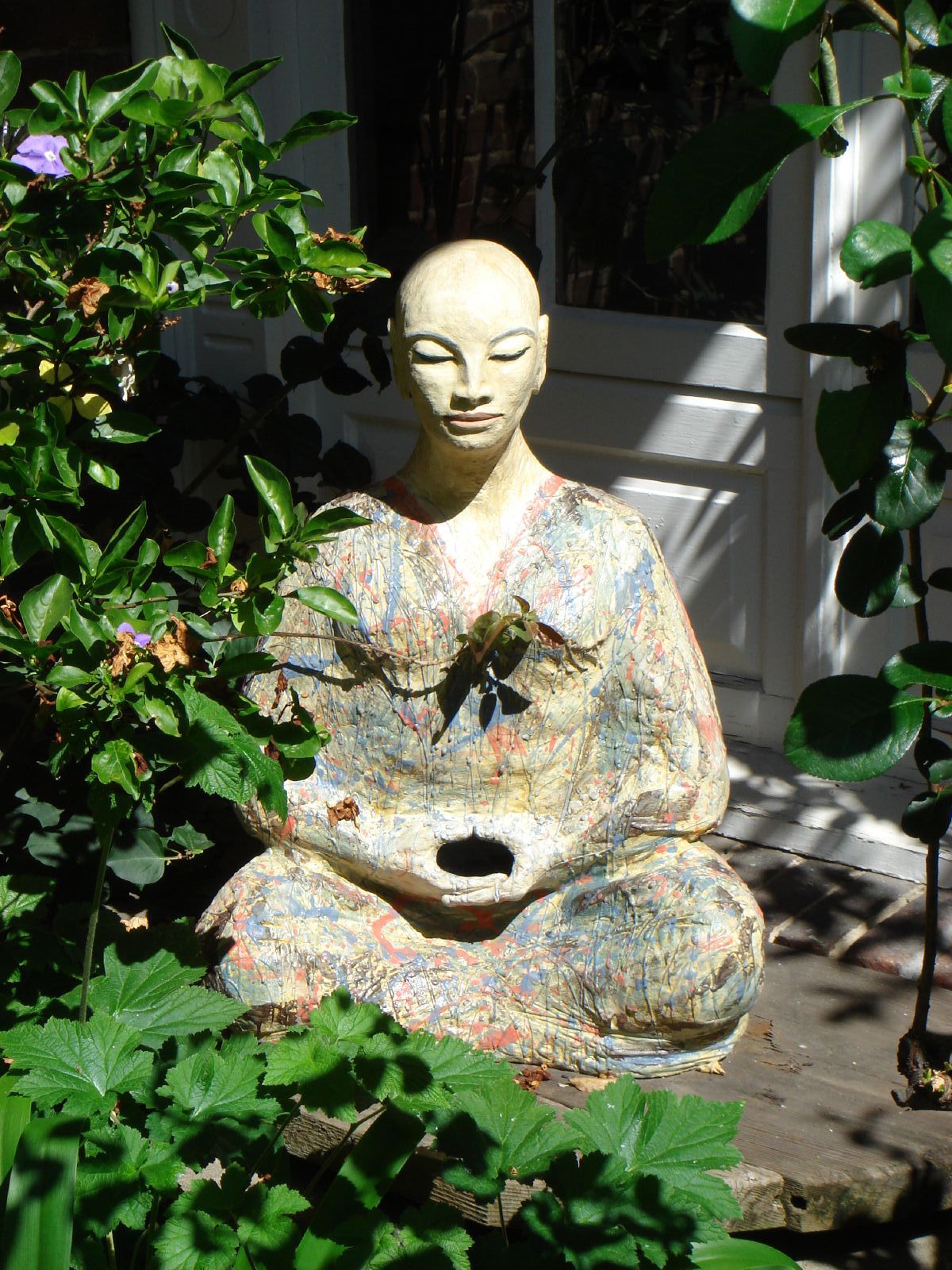
Across Zen gardens, monk's-robe turtlenecks, Ansel Adams prints, and stripped-bare rooms with one exquisite turntable, the pattern is relentless: reduce until only the essential curve, line, or note remains, then obsess over that curve until it feels inevitable. He treated spiritual austerity (fasting, sitting zazen, rereading Autobiography of a Yogi) and material austerity (identical cars, a single uniform, a house with almost no furniture) as the same discipline — clearing away noise so that whatever survived, a Bach prelude, a Bösendorfer piano, a rounded ceramic lip, could be trusted as the truth of the thing. Even his enthusiasms were curatorial rather than accumulative: not collecting, but selecting, again and again, the one version that was already perfect.

01

Cello Suite No. 1 in G Major – Prelude

Johann Sebastian Bach, performed by Yo-Yo Ma·1720 (composition); 1999 recording

Jobs revered Yo-Yo Ma's performance of this Bach prelude to the point of metaphysics, telling the cellist his playing was "the best argument" he had ever heard for the existence of God. He invited Ma to perform at his wedding, had him play privately on a Stradivarius, asked him to promise to play at his funeral, and featured this exact recording in the original iPod demo.

02

One Too Many Mornings

Bob Dylan·1964

Isaacson reports this as Jobs's favorite Dylan song, the one he returned to even as his enthusiasm for Dylan's later work cooled, sitting atop an otherwise near-complete personal collection of Dylan's 1960s and 1970s catalog.

03

The Royal Albert Hall Concert

Bob Dylan·1998 release (recorded 1966)

Jobs and Steve Wozniak spent their teenage years hunting down Dylan bootlegs from the 1965–66 electric tours, amassing over a hundred hours of tape centered on this era. Decades later Jobs chose this specific recording as one of twenty discs preloaded on the first giveaway iPods.

04

A Hard Day's Night

The Beatles·1964

Jobs sang along on stage to "I Should Have Known Better" and "If I Fell" from this album while demoing the original iPod, and he chose the album itself as one of twenty CDs preloaded onto the giveaway devices afterward.

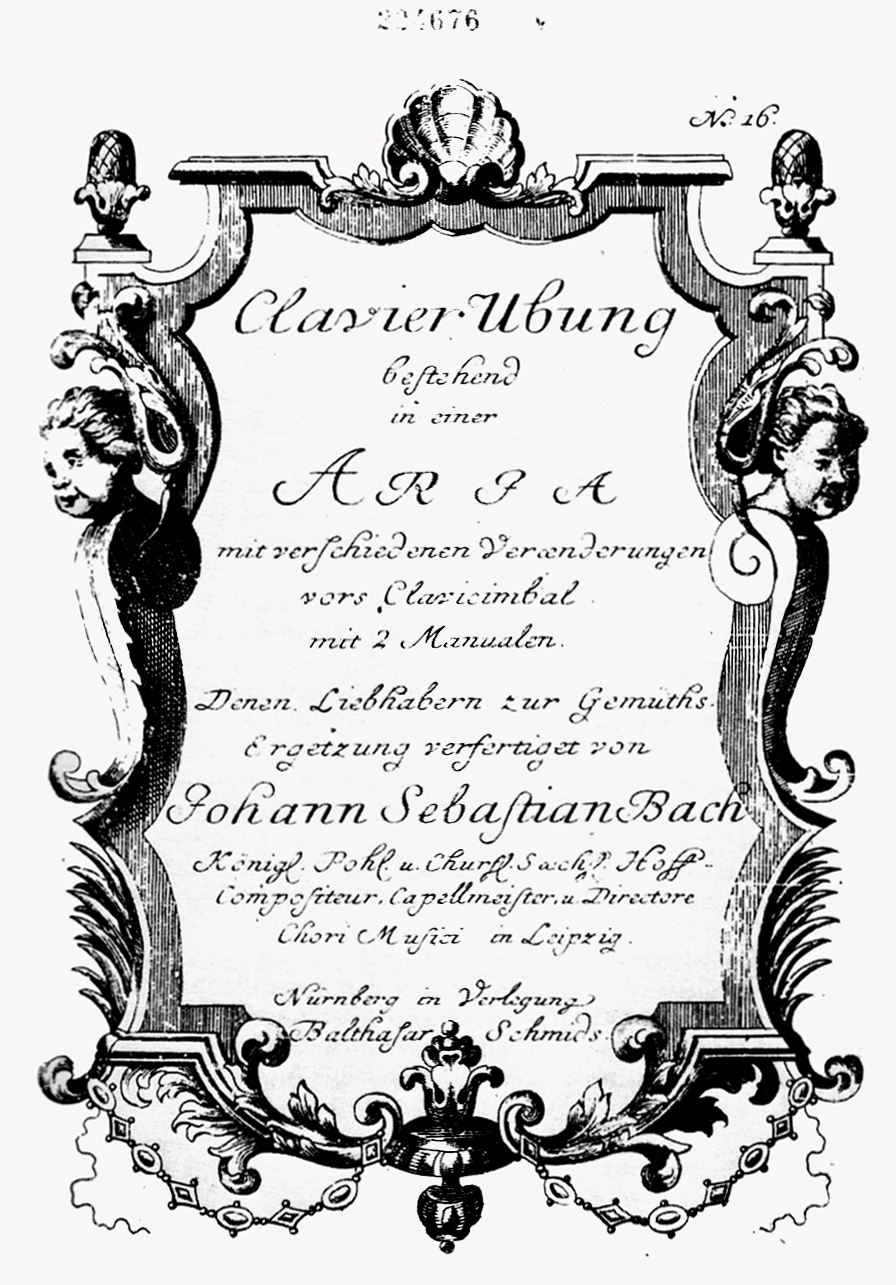
Goldberg Variations

Goldberg Variations

Johann Sebastian Bach, performed by Glenn Gould·1955 and 1981 recordings

Jobs compared Gould's two recordings of this work almost as a study in artistic evolution, telling Isaacson he used to prefer the "younger, exuberant" 1955 take but had come to understand "where he was coming from" in the more restrained 1981 version.

06

Both Sides Now

Joni Mitchell·1969 original; 2000 orchestral re-recording

Jobs played Isaacson the slow 2000 orchestral version of this song and remarked, "It's interesting how people age," using the contrast with the 1969 original as a private meditation on aging. He said he liked "the sad side of Joni Mitchell."

07

Surfacing

Sarah McLachlan·1997

The track "Building a Mystery" from this album was the very first song Jobs played in public on an iPod, and he separately chose the full album as one of twenty CDs preloaded on the giveaway devices.

08

Legend

Bob Marley & The Wailers·1984 compilation

Immediately after playing the first demo song on stage, Jobs cued up Marley's "Could You Be Loved," and he separately selected the compilation "Legend" as one of the twenty giveaway CDs, one of the few reggae records in that otherwise rock-and-folk-heavy set.

09

Nevermind

Nirvana·1991

Jobs included this album among the twenty CDs he chose to preload onto the giveaway iPods at the original launch event, one of the few 1990s rock records in a set otherwise dominated by 1960s and 70s music.

10

Uncle John's Band

Grateful Dead·1970

When Isaacson asked Jobs for a piece of music from their youth that had aged well, Jobs cued up this specific song on his iPod, singling it out from the broader Dead bootleg culture he had immersed himself in as a young listener.

11

Here Comes the Sun

The Beatles·1969

This was the sole Beatles track on a short reconstructed list of Jobs's favorite songs, and it recurs in a separately curated list of music attributed to him alongside other Beatles staples, suggesting a repeated rather than incidental choice.

12

Beast of Burden

The Rolling Stones·1978

This song appears on reconstructed lists of Jobs's favorite tracks; separately, he told Mick Jagger that if a vault holding either band's masters caught fire, he would grab the Beatles' rather than the Stones', because "somebody else could have replicated the Stones" — even as he kept a curated set of Stones highlights on his iPod.

13

Kind of Blue

Miles Davis·1959

Jobs included this album among the twenty CDs he selected for the original iPod giveaway, and its track "Blue in Green" separately appears on reconstructed lists of his favorite songs.

14

Play

Moby·1999

Jobs included this album among the twenty CDs preloaded on the original giveaway iPods, one of the few contemporary electronic records in an otherwise vintage-heavy selection.

15

Time Out

The Dave Brubeck Quartet·1959

Jobs included this album among the twenty CDs preloaded on the original giveaway iPods; its track "Take Five" is separately catalogued as music used in Apple's iPod-era presentations.

16

Imagine

John Lennon·1971

This song appears on reconstructed lists of Jobs's favorite music, with secondary commentary connecting its utopian message to Jobs's stated belief that technology could make the world better — an interpretive link rather than a documented statement by Jobs himself.

17

Hard Headed Woman

Cat Stevens·1970

This song appears on reconstructed lists of Jobs's favorite music alongside other Cat Stevens tracks such as "Father and Son," suggesting he grouped the artist's work together, though no direct statement from Jobs about this specific song is documented.

01

Toy Story

John Lasseter (director); Pixar Animation Studios·1995

Jobs treated Toy Story as both a technological proving ground and a timeless narrative, obsessively iterating its visuals while insisting its enduring value lay in the story of friendship rather than the novelty of computer graphics. He repeatedly screened work-in-progress cuts for friends like Larry Ellison to show incremental improvements in rendering and shadows, revealing how he engaged with the film as a product to be perfected frame by frame rather than a finished artwork to admire at a distance. In a 1996 interview he predicted people would still be watching Toy Story in sixty years because of its emotional core, a remark that shows he saw it as a kind of cinematic manifesto for his belief that technology must serve human stories.

02

Toy Story 3

Lee Unkrich (director); Pixar Animation Studios·2010

Late in his life Jobs chose Toy Story 3 as one of just three films to load onto his iPad 2 for a solo trip to his beloved Kona Village resort, suggesting he returned to this sequel not as a businessman checking a company product but as a viewer with a personal attachment to the story. Having it alongside two live-action thrillers suggests he treated it as emotionally serious cinema rather than mere family entertainment, fitting given the film's themes of aging and letting go.

03

Chinatown

Roman Polanski (director)·1974

Jobs's decision to carry Chinatown on his iPad for a quiet solo trip indicates a taste for formally precise, morally ambiguous cinema in contrast to the clean narratives of mainstream Hollywood. Within the tiny three-film selection he prepared, it occupies the slot of the classic, meticulously crafted film, implying he valued it as a kind of benchmark much like he treated certain design objects as standards of excellence.

04

The Bourne Ultimatum

Paul Greengrass (director)·2007

By selecting The Bourne Ultimatum as one of only three films on his iPad before a retreat to Kona Village, Jobs signaled an appreciation for tightly edited, contemporary action thrillers built on paranoia about surveillance and institutional power. Placing it alongside Chinatown and Toy Story 3 shows he did not compartmentalize 'serious' and 'genre' cinema.

05

Atlas Shrugged: Part I

Paul Johansson (director)·2011

Jobs reportedly attended the busy opening night of this adaptation near the end of his life, a choice that fits with Steve Wozniak's recollection that Ayn Rand's novel was 'one of his guides in life.' The report suggests Jobs was drawn to the film for its ideological content rather than its cinematic reputation, which was widely considered weak.

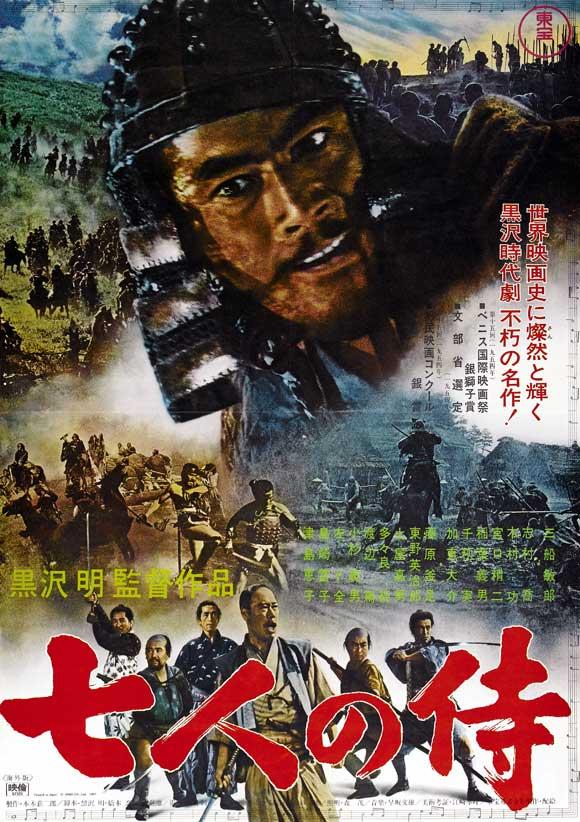
Seven Samurai

Seven Samurai

Akira Kurosawa (director)·1954

Seven Samurai tops a widely circulated 'Steve's Favourite Movies' list, suggesting compilers associated Jobs with long-form narratives about leadership, sacrifice, and small teams facing overwhelming odds. No primary quotation from Jobs about this film has been found; the attribution rests entirely on secondary taste lists.

07

Blade Runner

Ridley Scott (director)·1982

Blade Runner is frequently listed among films attributed to Jobs's taste, implying a perceived affinity for dystopian science fiction about technology and identity. As with Seven Samurai, this rests on compiled secondary lists rather than any direct statement or documented viewing by Jobs.

01

A Woman Combing Her Hair (Kami Suki)

Hashiguchi Goyō·1920

Jobs was captivated by this shin-hanga portrait, buying two original prints from the Matsuoka Gallery in Tokyo—one for his home, one for Apple—and chose this exact high-resolution scan to demonstrate the Macintosh's graphics at its 1984 unveiling.

02

Senju Waterfall, Akame

Kawase Hasui·1951

This print of a tree framed against falling water was the piece that first sparked Jobs's teenage fascination with Japanese woodblock prints, studied repeatedly at the Fernandez family home.

03

Red Sunset

Kawase Hasui·1937

Jobs specifically requested this rare pre-WWII print of soldiers on horseback under a crimson sky, the only time he arrived at the Matsuoka Gallery with an advance request rather than browsing available stock.

04

Etchu Seto-yaki Ceramics

Yukio Shakunaga·c. 1999

Jobs was moved by the tactile warmth and rounded contours of Shakunaga's porcelain at a Kyoto exhibition, telling the potter that rounded corners made objects feel intuitive to hold; he maintained a decade-long relationship, commissioning custom teacups, mugs, and plates to precise sizing.

05

Haikaburi Ash-Glazed Stoneware Bowl and Cups

Takahashi Rakusai V·2010

On one of his final trips to Japan, Jobs visited the Shigaraki kiln master to study natural ash-glaze effects, selecting Rakusai's finest large unglazed stoneware bowl and commissioning tea ware with unpredictable kiln finishes.

06

16th-Century Uzukumaru Ceramic Jar

16th century

While handling this antique crouching-style jar in Kyoto, Jobs repeatedly called it 'sublime,' citing its smooth curved clay shoulder as the tactile benchmark he wanted hardware designers to replicate on device casings.

07

The Bull (Le Taureau)

Pablo Picasso·1945

Jobs made Picasso's eleven-lithograph sequence, showing a bull reduced step by step to pure contour lines, a cornerstone of the Apple University curriculum he helped develop to teach designers and engineers how to strip away non-essential detail.

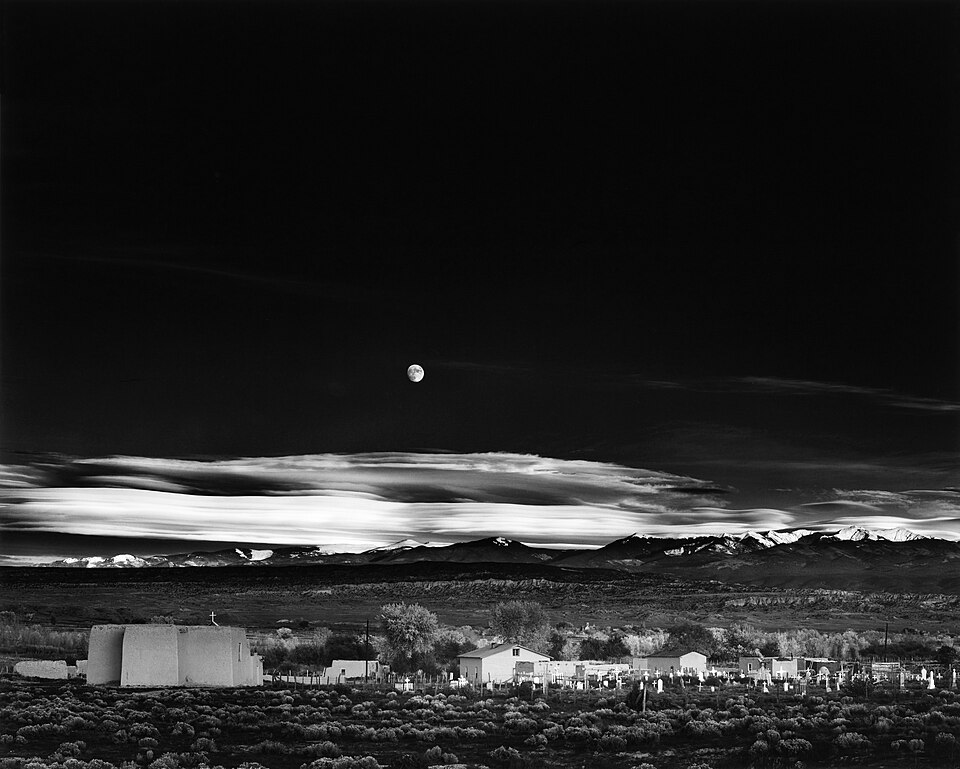
Moonrise, Hernandez, New Mexico

Moonrise, Hernandez, New Mexico

Ansel Adams·1941

Jobs is said to have hung an original Ansel Adams silver gelatin print in his office and homes, admiring the fusion of technical darkroom precision with artistic vision, though detailed sourcing for this specific claim is thin.

Architecture

Sources →
01

Jackling House

George Washington Smith·1925–1926

Jobs bought this sprawling Spanish Colonial Revival mansion in 1984, lived in it for about a decade, then spent years and significant legal effort fighting to have it demolished, revealing a deep personal dislike for ornate historicist domestic architecture and a desire to replace it with something simpler and more modern.

02

Apple Park

Norman Foster / Foster + Partners·2011–2017

Jobs personally presented and shaped Apple Park as his ultimate architectural commission: a perfectly circular, glass-walled office ring set in a restored orchard landscape on the site of a former HP campus dominated by asphalt parking, which he called "the best office building in the world," revealing his love of pure geometric form, advanced glass technology, and park-like corporate campuses over car-centric office sprawl.

03

Apple Fifth Avenue Glass Cube

Bohlin Cywinski Jackson (architects); concept by Steve Jobs; scale test by Harry Macklowe·2006 (opened); early 2000s (design and mock-up)

Jobs conceived the Fifth Avenue glass cube as a pure, iconic architectural object, initially insisting it be 40 feet tall; after developer Harry Macklowe built a full-scale nighttime scaffolding mock-up revealing that height overwhelmed the plaza, Jobs accepted a 30-foot version, showing his architectural judgment was strongly experiential and responsive to full-scale proportion rather than fixed on abstract ideals.

04

Nomura Villa

Nomura Tokushichi (client); architect unknown·1928

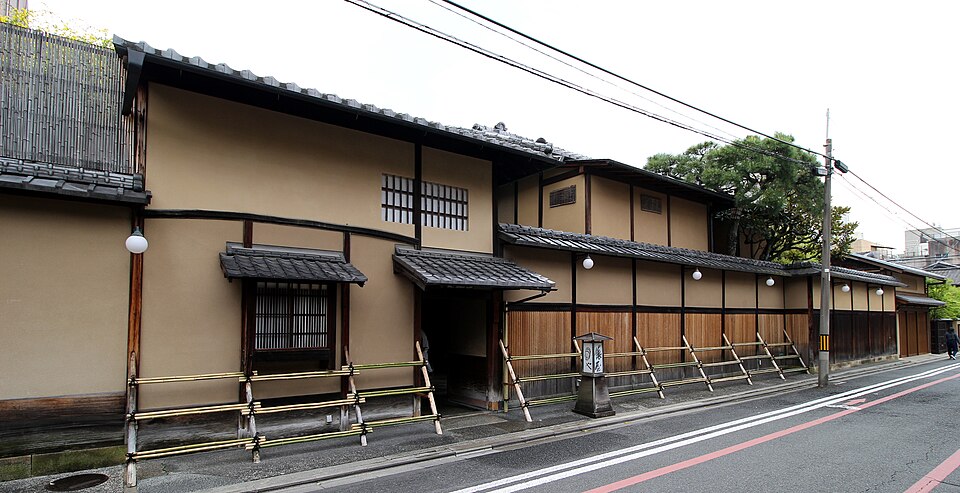
On a 2010 visit to Kyoto, Jobs was so captivated by the Nomura Villa's garden that he arranged, via a same-day phone call, a rare private tour through the company's headquarters, afterward declaring "I want to have a garden like that," a specific and documented expression of longing for this particular villa's landscape architecture.

05

Woodside Replacement House (unbuilt design)

c. 2008–2010 (concept design)

Jobs' proposed replacement for the demolished Jackling House was a relatively small, pared-down modernist retreat, roughly half the mansion's size and stripped of the amenities typical of a billionaire's estate, indicating a preference for restrained, private architecture over ostentatious display.

06

Eichler House (childhood home)

Joseph Eichler·c. 1950s

Jobs grew up in a modernist Eichler tract house with open plans, post-and-beam construction, and glass walls; some later observers have speculated this everyday modern architecture habituated him to transparency and simplicity, though Jobs himself rarely commented on the connection, making this a plausible but unconfirmed influence.

07

Waverley Street House, Palo Alto

Mid-1990s (purchase)

After marrying Laurene Powell, Jobs settled into an unremarkable suburban house on Waverley Street in Palo Alto rather than a showpiece estate, a detail suggesting he preferred an ordinary neighborhood setting for daily life, though the source evidence is thin and largely descriptive.

01

Reed College Calligraphy Course

Lloyd Reynolds (and successor Robert Palladino)·1973–1974

Jobs audited Reynolds' calligraphy course at Reed College after dropping out of formal enrollment, learning about serif and sans-serif letterforms, letter spacing, and proportion. He later said directly that without this course the Macintosh would never have offered multiple typefaces and proportionally spaced fonts, making it one of the few educational experiences he explicitly credited with shaping a specific design decision in his own products.

02

NeXT Logo

Paul Rand·1986

Jobs paid Paul Rand 100,000 dollars to design the NeXT identity and, in his own recorded words, praised Rand specifically for refusing to present multiple options and instead delivering one fully reasoned solution — the tilted wordmark on a black cube — calling him one of the greatest problem solvers and graphic designers he had worked with. This is a rare instance of Jobs articulating, on camera, exactly what he valued in a designer's process.

03

Bösendorfer Grand Piano

Bösendorfer·c. early 1980s

Jobs personally bought a Bösendorfer grand piano, costing roughly 75,000–80,000 dollars, and placed it in the Macintosh team's building purely as an object of inspiration and craftsmanship, despite not playing it himself. He later parked it alongside his BMW motorcycle in the Bandley 3 lobby specifically as an example of the standard of design and manufacture he wanted employees and visiting designers to measure Apple's own products against.

04

BMW R60/2

BMW Motorrad·1966

Jobs rode a 1966 BMW R60/2 around Silicon Valley in the early 1980s, photographed for a National Geographic profile visiting friends to drink wine and talk about the future. When its clutch cable broke and he lost interest in riding it, rather than repairing or discarding it he had it moved into Apple's Bandley 3 lobby next to the Bösendorfer piano as a static example of great design — reportedly also intended to impress the German designer Hartmut Esslinger, whom he was courting for Apple.

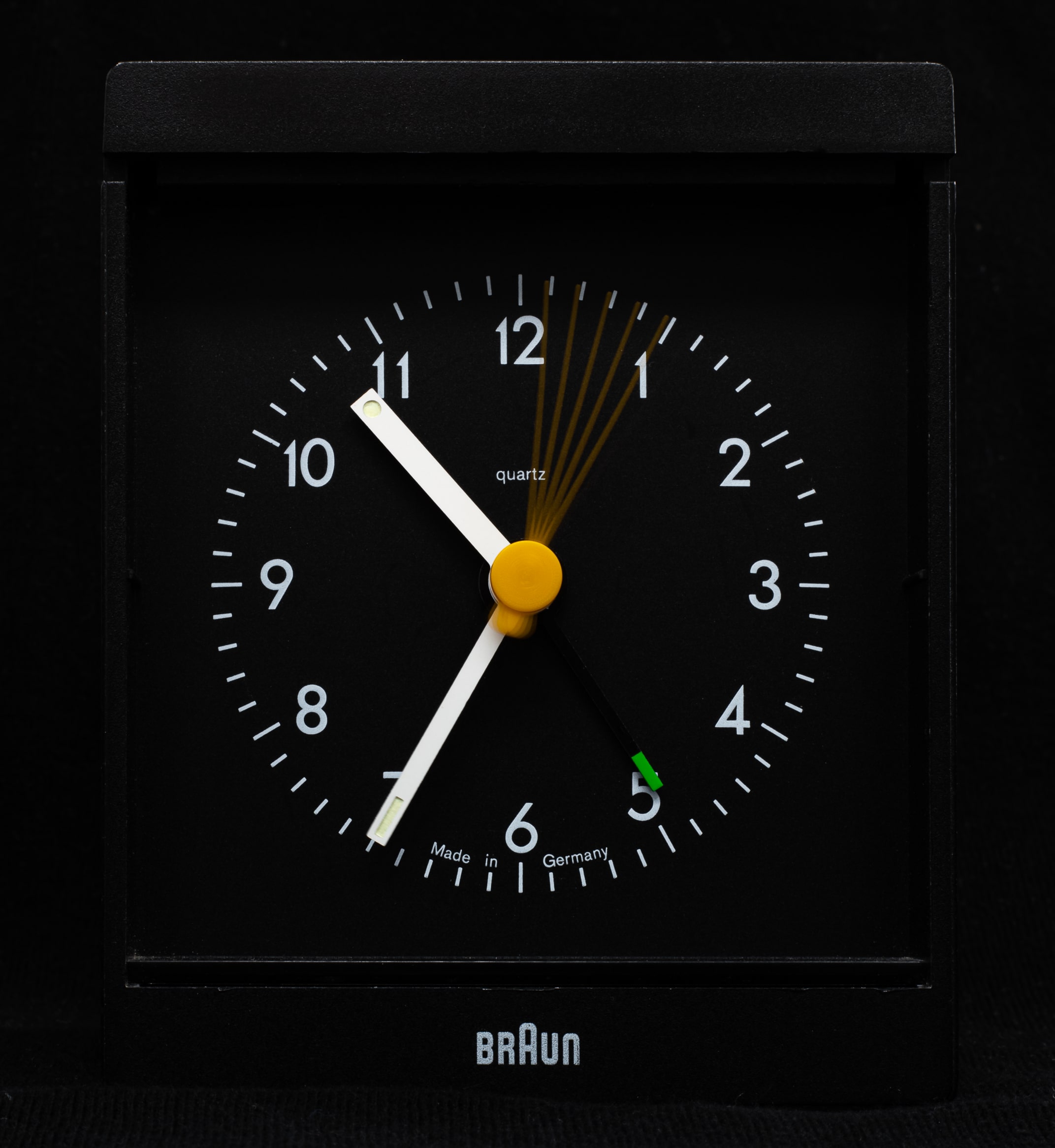
Braun ET66

Braun ET66

Dieter Rams and Dietrich Lubs for Braun·1987

A design retailer specializing in Braun objects states that Jobs and Jony Ive were both admirers of Braun's work and Rams' 'less but better' philosophy, and that Apple's iPhone calculator interface is a direct homage to the ET66's layout of circular keys and restrained colour accents. This makes the ET66 a concrete, traceable link between an object Jobs cited as a reference and a specific shipped Apple design.

06

Michell GyroDec

Michell Engineering·in use c. 1982

The turntable visible behind Jobs in Diana Walker's 1982 photograph of his nearly-empty Woodside living room was later identified by journalists as a Michell GyroDec — a turntable known for its exposed suspended platter, brass weights, and visible mechanism rather than a concealed motor. Its presence, in a room stripped of almost all other furniture, marks it as one of the few objects Jobs gave prominent physical space to.

07

Spectral STASIS-1

Spectral Audio·in use c. 1982

Jobs' Woodside stereo system used a Spectral STASIS-1 solid-state power amplifier paired with a Spectral FET-One preamp rather than any tube-based amplification. Audiophile discussion specifically notes he never owned a tube amp or preamp, suggesting a preference for the precise, fast, minimally-styled solid-state components over the warmer, more traditionally styled alternatives many audiophiles chose instead.

08

Acoustat Monitor 3

Acoustat·in use c. 1982

The speakers in Jobs' Woodside system were identified as Acoustat Monitor 3 electrostatic panels — tall, flat, sculptural units using charged membranes rather than conventional cone drivers, visually dominant in an otherwise near-empty room. Their scale and presence in the 1982 photograph indicate Jobs prioritized visible, high-end audio hardware over conventional furniture in his own home.

Tiffany Lamp

Tiffany Lamp

Tiffany Studios (attributed)·in Jobs' home by 1982

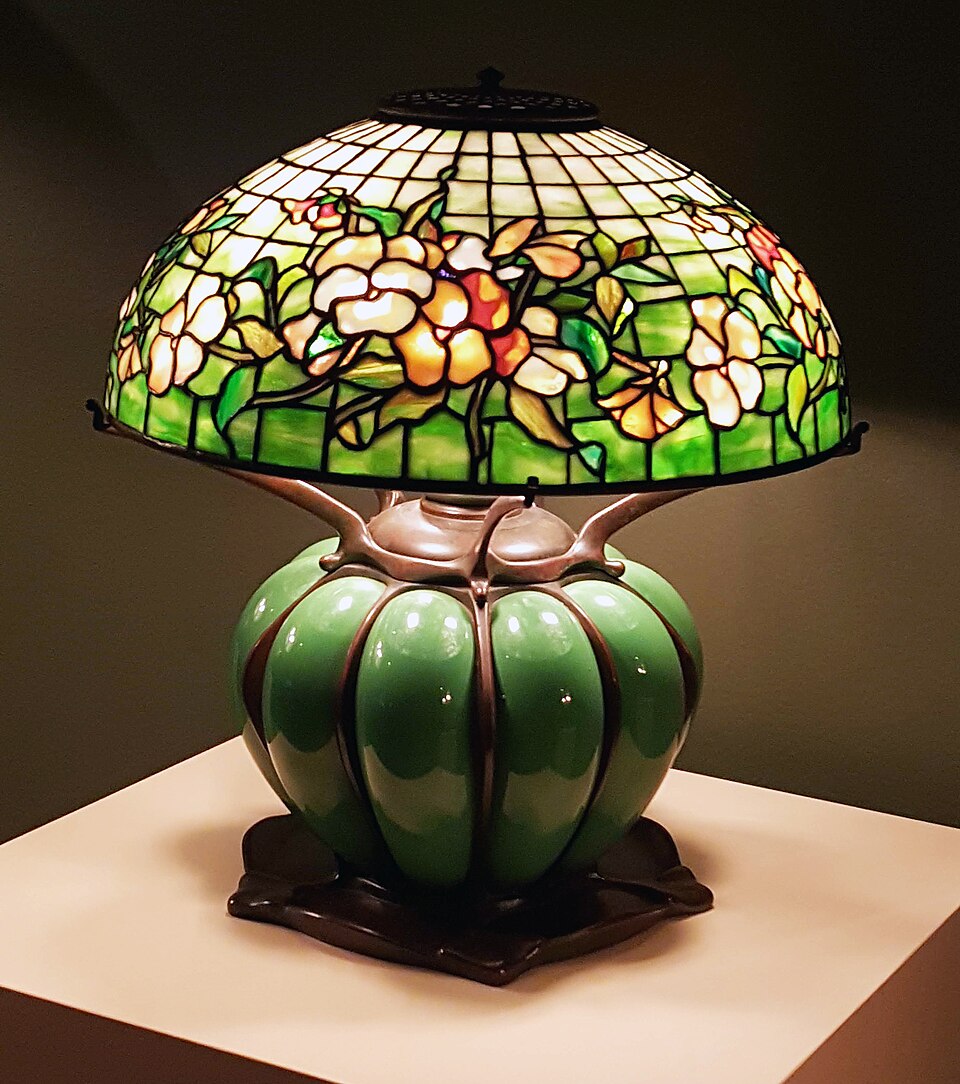
In Diana Walker's 1982 photograph of Jobs sitting on the bare floor of his Woodside living room, a stained-glass Tiffany lamp is one of only a handful of objects present — alongside the stereo system and a few records — in a home he otherwise left almost entirely unfurnished for years. Its ornate, historical craftsmanship stands in deliberate contrast to the room's stripped-down modernism.

10

New Balance 991

New Balance·c. late 1990s–2011

Jobs completed his personal uniform with grey New Balance 991 sneakers, favoring their subdued, technical, largely unbranded look over more overtly styled athletic footwear — keeping the lower half of his outfit visually quiet so attention stayed on the turtleneck and, on stage, on the products themselves.

11

Wilson Audio Grand Slamm

Wilson Audio·reported later upgrade, undated

Forum-level audiophile accounts claim that Jobs later replaced his Acoustat electrostatic speakers with a Wilson Audio Grand Slamm system — a massive, extremely expensive multi-module loudspeaker — suggesting continued personal investment in top-tier audio equipment as his means grew, though this claim rests on secondhand audiophile-community reconstruction rather than a primary source.

01

Issey Miyake Black Mock Turtleneck

Issey Miyake·c. early 1980s–2011

Jobs turned Miyake's black mock turtleneck into a deliberate personal uniform that eliminated daily decision-making and became his visual signature. He personally commissioned about a hundred of them from Miyake after admiring Sony's Miyake-designed staff uniforms in Japan, and later showed Isaacson stacks of the tops in his closet, saying this was what he wore and that he had enough to last the rest of his life. The specific model later traced to archival sale listings was Miyake's Homme Plissé mock turtleneck from the Autumn/Winter 2008–2009 line, discontinued by Miyake after Jobs' death.

02

Levi's 501 Jeans

Levi Strauss & Co.·c.1980-2011

Worn as the fixed lower half of his daily uniform from early product announcements through modern keynotes; Levi Strauss & Co. supplied him with fresh pairs directly on request in his later years.

03

New Balance 991/992 Sneakers

New Balance·c.1998-2011

Chosen as the footwear anchor of his uniform for comfort and understated grey utilitarianism, worn during keynote walks and product unveilings across the Mac OS X, iPod, and iPhone eras.

04

Lunor Round Frameless Spectacles

Lunor·c.1998-2011

Favored after his return to Apple for their minimalist, frameless circular silhouette echoing John Lennon and Mahatma Gandhi, two of his personal heroes; became part of his fixed late-career visual identity.

05

Sony Employee Uniform Jacket

Issey Miyake for Sony·1981

Encountered by Jobs during a visit to Sony's Japan headquarters; he admired how the futuristic taupe ripstop-nylon jacket with zip-off sleeves bound employees to the company, prompting him to commission Miyake to design an equivalent Apple uniform.

06

Wilkes Bashford Leather Bomber Jacket

Wilkes Bashford·c.1983

Purchased from the premier San Francisco luxury boutique, worn during his early-1980s Silicon Valley phase before he settled into his consistent black-and-denim uniform.

07

Versace Striped Button-Up Shirt

Gianni Versace·c.1985-1988

Worn during off-site retreats and team sessions in the formation of NeXT, reflecting Jobs' affinity for high-end Italian tailoring in the mid-1980s before his later minimalism.

08

Seiko Chariot Watch (Ref. 6431-6030)

Seiko·c.1984

Worn on his wrist in the iconic 1984 Norman Seeff portrait with the original Macintosh, its ultra-thin case and spare dial echoing the austere design language he applied to early Apple hardware.

09

Birkenstock Arizona Sandals

Birkenstock·c.1970-1985

His staple footwear during Apple's founding years in Los Altos, reflecting his 1970s countercultural roots and preference for spartan, informal daily dress before he adopted a fixed uniform.

10

Bespoke Brioni Suit

Brioni·c.1985-1990

Said to have been worn during the founding era of NeXT Computer to project executive credibility to corporate and higher-education clients, though the specific attribution to Brioni is not clearly substantiated by contemporary sourcing.

01

Five Toro and Five Hamachi Nigiri

Kaygetsu·c. 1987-2011

Jobs's strict, unwavering regular sushi order consisting of exactly five pieces of fatty tuna and five pieces of yellowtail. Although he maintained a strict vegan/vegetarian regimen in public life, Japanese raw fish was the major exception he regularly and enthusiastically consumed.

02

Kaygetsu

Toshio Sakuma·2004-2011

Jobs's favorite restaurant in Silicon Valley and one of the only places where the notoriously impatient CEO was willing to wait up to 30 minutes for a table at Seat No. 1. He held Apple board dinners here, celebrated major product launches with Jony Ive, threw a 25-person surprise party for Laurene Powell Jobs, and even sent his private chef here to learn Sakuma's techniques.

03

Mucusless Diet Healing System

Arnold Ehret·c. 1972

The book that pushed Jobs into his most radical eating habits, convincing him that the body should only intake fruit and starchless vegetables to avoid accumulating toxic mucus. It prompted him to warn college friends about the 'mucus dangers' in bagels and launched his habit of week-long juice and fruit fasts.

04

Carrot Mono-Diet

c. 1972-1976

Jobs lived for weeks at a time consuming almost nothing but carrots and freshly extracted carrot juice, to the point where his skin noticeably turned a distinct reddish-orange hue.

Broccoli

Broccoli

c. 1991-2011

Jobs's home dining aesthetic mirrored his product philosophy: extreme minimalism and hyper-focus on a single element. Evening meals at the Jobs household often consisted of massive quantities of a single in-season vegetable harvested from their garden.

06

Roman Meal Cereal

Roman Meal Company·1972-1973

Jobs's primary dietary staple during his early vegetarian college days in Oregon, purchased in bulk boxes from the local co-op and eaten as a cheap whole-grain source before he adopted Arnold Ehret's anti-grain fruitarian regime.

07

Sushi Iwa

Sushi Iwa·c. 1990s-2010

Jobs's cherished traditional sushi counter in Kyoto, which he visited during trips to Japan accompanied by his daughter Lisa. He declared it served the finest raw fish he had ever eaten.

08

Greens Restaurant

San Francisco Zen Center·c. 1980s-2000s

A landmark San Francisco gourmet vegetarian restaurant overlooking the bay where Jobs held high-stakes personal meetings and dined regularly with Dr. Dean Ornish during his cancer treatment years. He treated its pure vegetable preparation as therapeutic and reportedly once demanded his meal be prepared 'without pans'.

09

Fraiche Artisan Yogurt Cafe

Jessica Goldman & Pat Galvin·c. 2007-2011

Jobs's neighborhood haunt on Emerson Street in downtown Palo Alto, where he walked to purchase fresh probiotic organic yogurt and handmade soy milk.

10

Odwalla

Odwalla·c. 1980s-2000s

Jobs was said to be a heavy consumer of Odwalla unpasteurized juices, which fit his raw-food ideology, and reportedly admired the simplicity of their twist-off bottle cap design.

11

SmartWater

Glaceau·c. 2000s-2011

Jobs was said to favor SmartWater as an everyday drink during keynotes and meetings, though this reflects general bottled-water use rather than a documented personal ritual.

01

Mercedes-Benz SL55 AMG

Mercedes-Benz·2006–2007

Jobs's silver SL55 AMG became famous for having no license plates and for habitually occupying handicapped parking spaces at Apple's campus, a rolling expression of his contrarian attitude toward everyday rules. He exploited a California grace period allowing new cars to be driven without permanent plates for six months by swapping the car for an identical new lease every six months, so no car ever needed plates. In a 2001 Fortune interview he called the missing plates "a little game I play" to avoid parking tickets, and when Walter Isaacson pressed him on it he half-jokingly claimed it was to avoid being followed. Colleagues recalled him parking in blue wheelchair-marked spots as though the chairman's title exempted him.

02

Volkswagen Bus

Volkswagen·c. early 1970s

In his early twenties Jobs drove a Volkswagen Type 2 bus and sold it, along with Steve Wozniak's programmable calculator, to raise the roughly $1,300 needed for parts for the Apple I prototype. The decision to liquidate a modest, countercultural vehicle rather than seek outside money captures both his frugality and his willingness to trade personal comforts for a larger technological bet, marking his transition from wandering hippie to focused entrepreneur.

03

Porsche 911 Cabriolet

Porsche·c. late 1970s–1990s

For years Jobs leased identical black Porsche 911 convertibles, trading each in roughly every six months for an indistinguishable replacement, a habit people around him mistook for aesthetic intolerance of scratches. His daughter Lisa Brennan-Jobs recalled asking if she could have one of his old Porsches and being sharply told she would get nothing, illustrating how tightly he controlled the cars and how little sentiment he attached to them. Later reporting suggests the true motive was avoiding license plates by exploiting California's six-month grace period, the same pattern he later repeated with the SL55 AMG.

04

Venus (superyacht)

Feadship (builder); Philippe Starck / Ubik (designer)·2012 (delivered posthumously)

Venus was the custom superyacht Jobs commissioned from Dutch builder Feadship and designed over five years with Philippe Starck, extending his taste for minimalism and integrated technology into a private vessel. Starck described the collaboration as sharing "the same idea about the elegance of the minimal, the elegance of work well done," noting Jobs initially gave him only a target length and bedroom count before obsessing over every detail. Jobs died before the yacht was completed and never boarded it; its long aluminium hull, three-meter structural glass windows, and iMac-driven wheelhouse carried his design sensibility from Apple Stores and devices into a floating home.

05

BMW Z8

BMW·c. 2000–2002

Jobs owned a BMW Z8, a limited-production aluminium-bodied roadster whose clean, retro-modern design and advanced engineering matched his preference for visually distinctive but understated performance cars. Auction documentation for the car explicitly ties it to his ownership and situates it within his broader pattern of favoring German-engineered vehicles, alongside his Mercedes-Benz SLs and BMW motorcycle.

06

Mercedes-Benz 500 SE

Mercedes-Benz·c. early 1980s

Alongside his BMW motorcycle, Jobs owned a Mercedes 500 SE sedan in the early 1980s, but contemporary accounts note he explicitly preferred commuting on the BMW R60/2 rather than using the car, treating the Mercedes as a secondary, underused possession.

Technology

Sources →
01

Sony Walkman

Sony (Akio Morita and team)·1979

Jobs treated the original Sony Walkman not as a consumer gadget but as a masterclass in how a small, focused piece of technology could reshape everyday habits. He dissected both the hardware and the decision to ship it without market research as a template for how he later wanted Apple to operate, and two decades later he was still described as obsessively studying it while developing the iPod.

Porsche 928

Porsche 928

Porsche·late 1970s–early 1980s

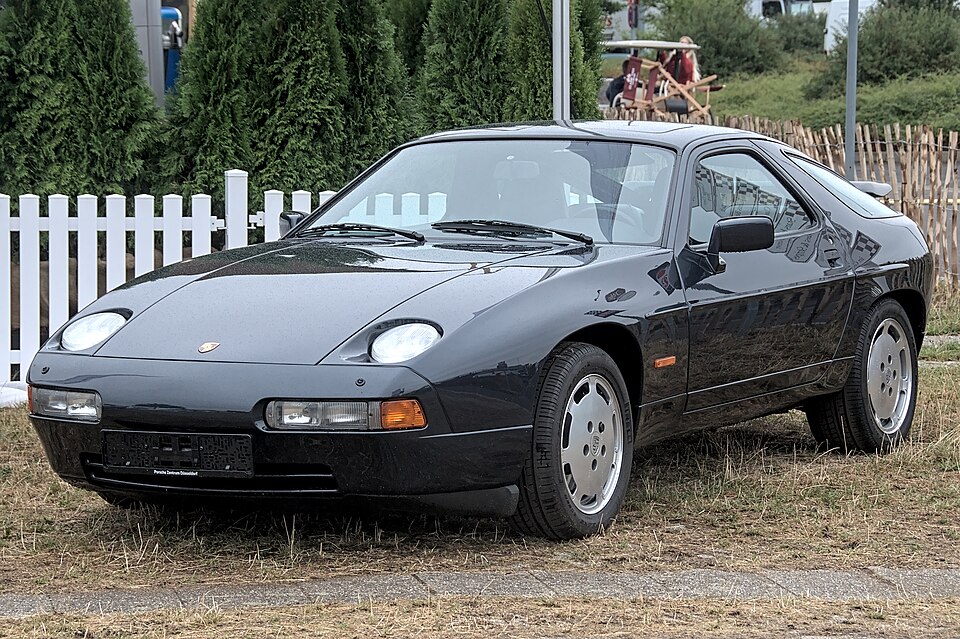
Jobs owned and drove a Porsche 928 in the early 1980s and used it as an explicit design metaphor when arguing for the Macintosh's aesthetic, insisting the computer should look 'more like a Porsche' than a boxy appliance. For Jobs the 928 was a reference exemplar of industrial design whose voluptuous curves he wanted translated into the plastic and metal shell of a personal computer.

03

Apple Keynote

Apple (developed for Steve Jobs)·2001 (alpha), 2003 public release

Keynote was originally built as a private, custom application for Jobs himself, designed to match his exacting demands for slide aesthetics and motion. He called it his favorite piece of software, using it to orchestrate Apple's major product unveilings once it matured, treating it as an extension of his stagecraft.

04

Concurrence

Lighthouse Design·mid-1990s

Before Apple built Keynote, Jobs relied on Concurrence, a NeXTSTEP presentation application from Lighthouse Design, using it for years as his main tool for slide shows and internal demos. His familiarity with it was strong enough that a former Sun CEO later teased him that Apple's Keynote looked 'identical' to Concurrence.

05

Sony CD Walkman

Sony (Akio Morita and team)·1984

When Morita handed Jobs one of the first CD Walkman units just before its commercial launch, Jobs was struck by how it encapsulated the 'spirit of Japanese manufacturing'—compact precision and impeccable finish—and treated it as a contemporary reaffirmation of the lessons he had drawn from the cassette Walkman.

06

QuickTime Player

Apple·late 1990s

After returning to Apple, Jobs refused to use Microsoft PowerPoint and instead repurposed QuickTime Player, Apple's media playback utility, as an improvised presentation engine, sequencing images and transitions to mimic the photographic sales presentations he admired. QuickTime directly seeded the custom tool that became Keynote.

07

Michell GyroDec MK1

Michell Engineering·early 1980s

Jobs used a Michell GyroDec MK1 belt-drive turntable as the centerpiece of his early-1980s Woodside hi-fi system, its exposed brass-weighted platter and skeletal frame matching his taste for visible, functional engineering in an otherwise nearly empty living room.

08

Acoustat Model 3

Acoustat·late 1970s–early 1980s

Jobs's Woodside listening room featured a pair of Acoustat Model 3 electrostatic loudspeakers, large planar panels producing sound without conventional woofers or tweeters, chosen for sonic transparency over mainstream box-speaker design and standing as near-sculptural objects in his sparse home.

09

Threshold FET-One

Threshold (Nelson Pass)·circa 1979–1981

Jobs's system included a Threshold FET-One preamplifier, a Nelson Pass design offering dedicated RIAA equalization for both moving-magnet and moving-coil cartridges, indicating he paired his exotic speakers and turntable with serious boutique electronics rather than an integrated receiver.

10

Threshold Stasis-1

Threshold (Nelson Pass)·1979–1981

Jobs's stereo used a pair of Threshold Stasis-1 monoblock power amplifiers, high-current, low-distortion units built to drive demanding electrostatic loads, reflecting a taste for robust, over-engineered amplification even in parts of the system invisible in normal use.

11

Denon TU-750S

Denon·early 1980s

A Denon TU-750S digital tuner completed Jobs's Woodside system, a comparatively modest component next to the exotic turntable and speakers, suggesting he reserved his most lavish investment for analog playback while handling FM broadcast reception with reliable, mid-priced equipment.

NeXTcube

NeXTcube

NeXT·1988–1993

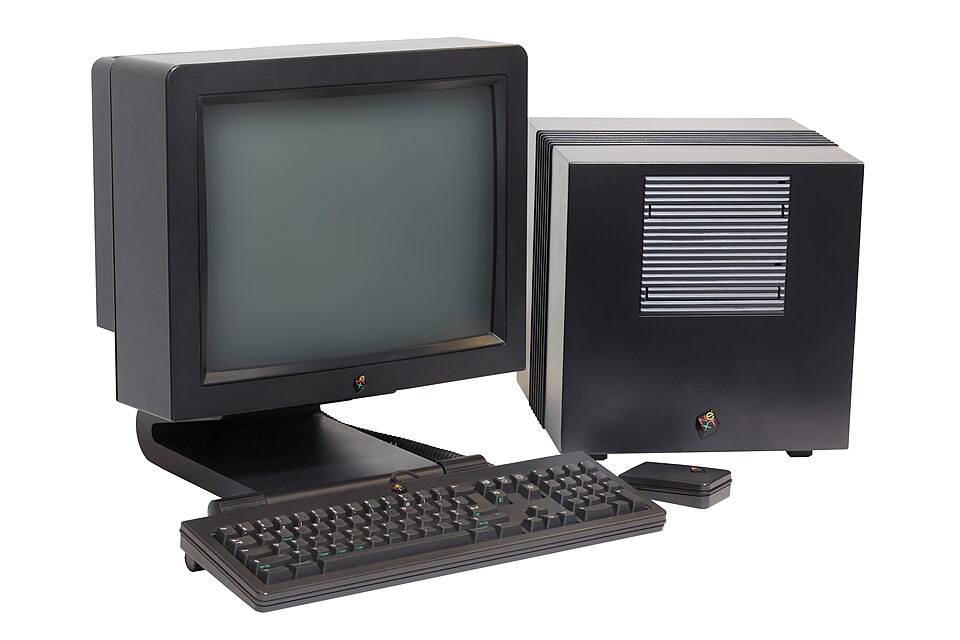
During his years away from Apple, Jobs used NeXTcube workstations as his primary computing environment, both as CEO of NeXT and as a daily user, treating the black magnesium cube and its NeXTSTEP operating system as a proving ground for his ideals of hardware and software design.

Linn Sondek LP12

Linn Sondek LP12

Linn Products·1970s

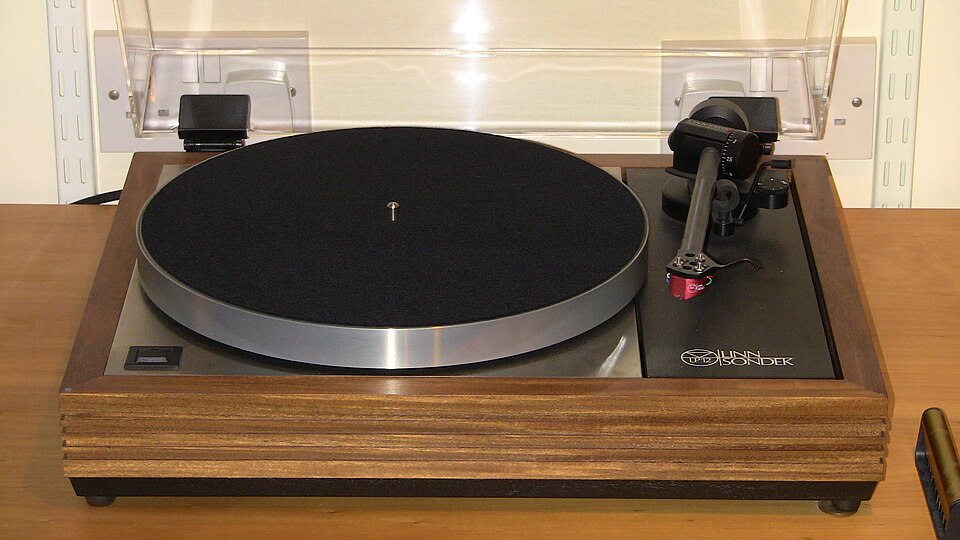
Before adopting the Michell GyroDec, Jobs is said to have used a Linn Sondek LP12, a cult audiophile turntable known for its tunability, in the same Woodside listening space later photographed by Diana Walker.

Mac Pro

Mac Pro

Apple·mid-2000s–early 2010s

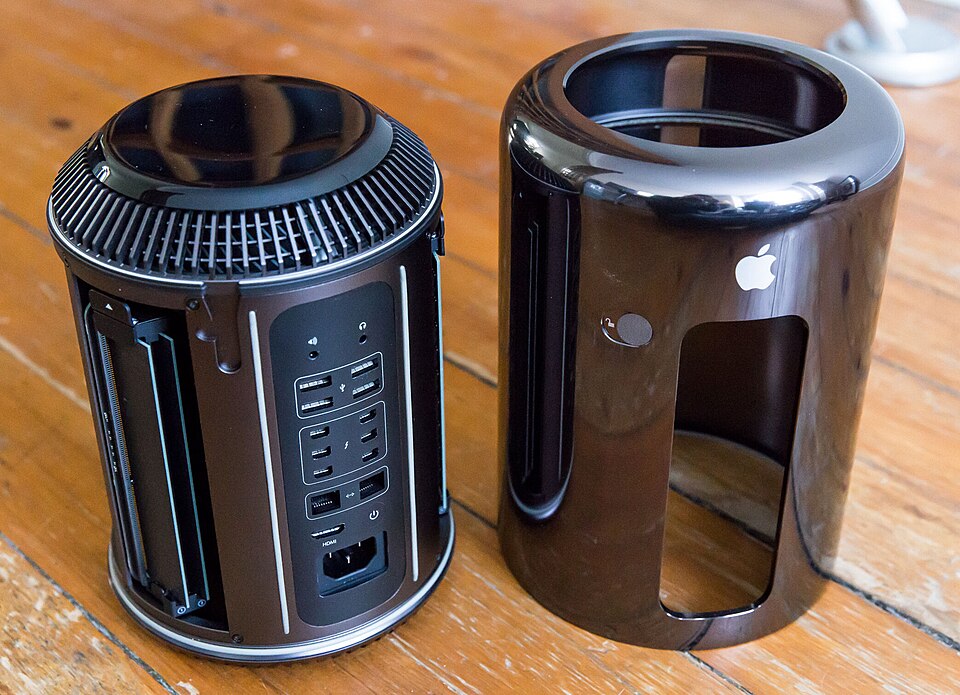
In his later years, Jobs is said to have primarily used a Mac Pro tower paired with the largest Apple display available, both at home and at work, suggesting he favored a powerful, stationary desktop setup over laptops or tablets for his own daily computing.

MacBook Air

MacBook Air

Apple·late 2000s

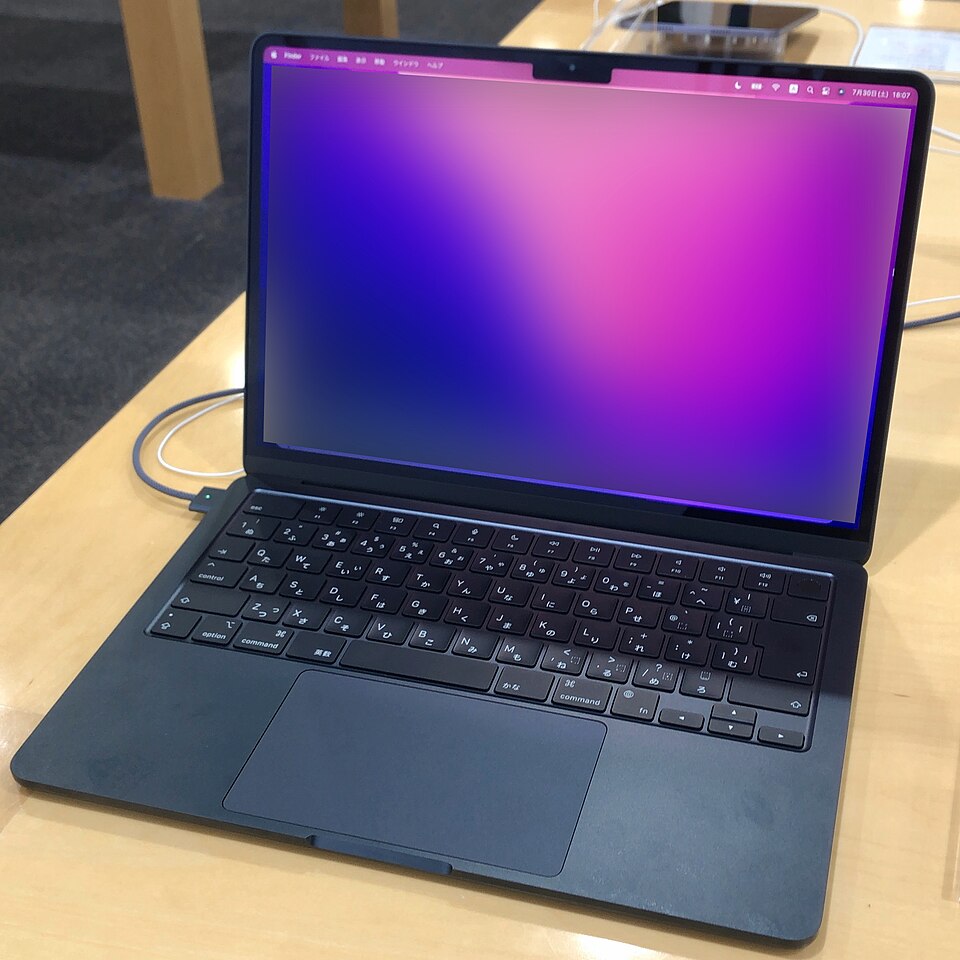
Despite being primarily a desktop user, Jobs is said to have used a 13-inch MacBook Air for at least some years, suggesting that when he did carry a portable computer, he chose Apple's thinnest, most minimal notebook.

Autobiography of a Yogi

Autobiography of a Yogi

Paramahansa Yogananda·1946

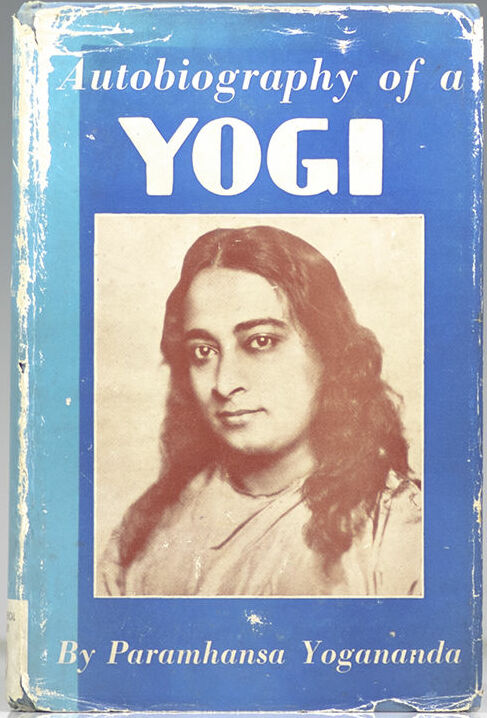
Jobs reread this book annually from his teenage years onward and arranged for it to be the sole memento distributed to mourners at his memorial service, making it the last thing he chose to say to the people who knew him.

Whole Earth Catalog

Whole Earth Catalog

Stewart Brand·1968–1972

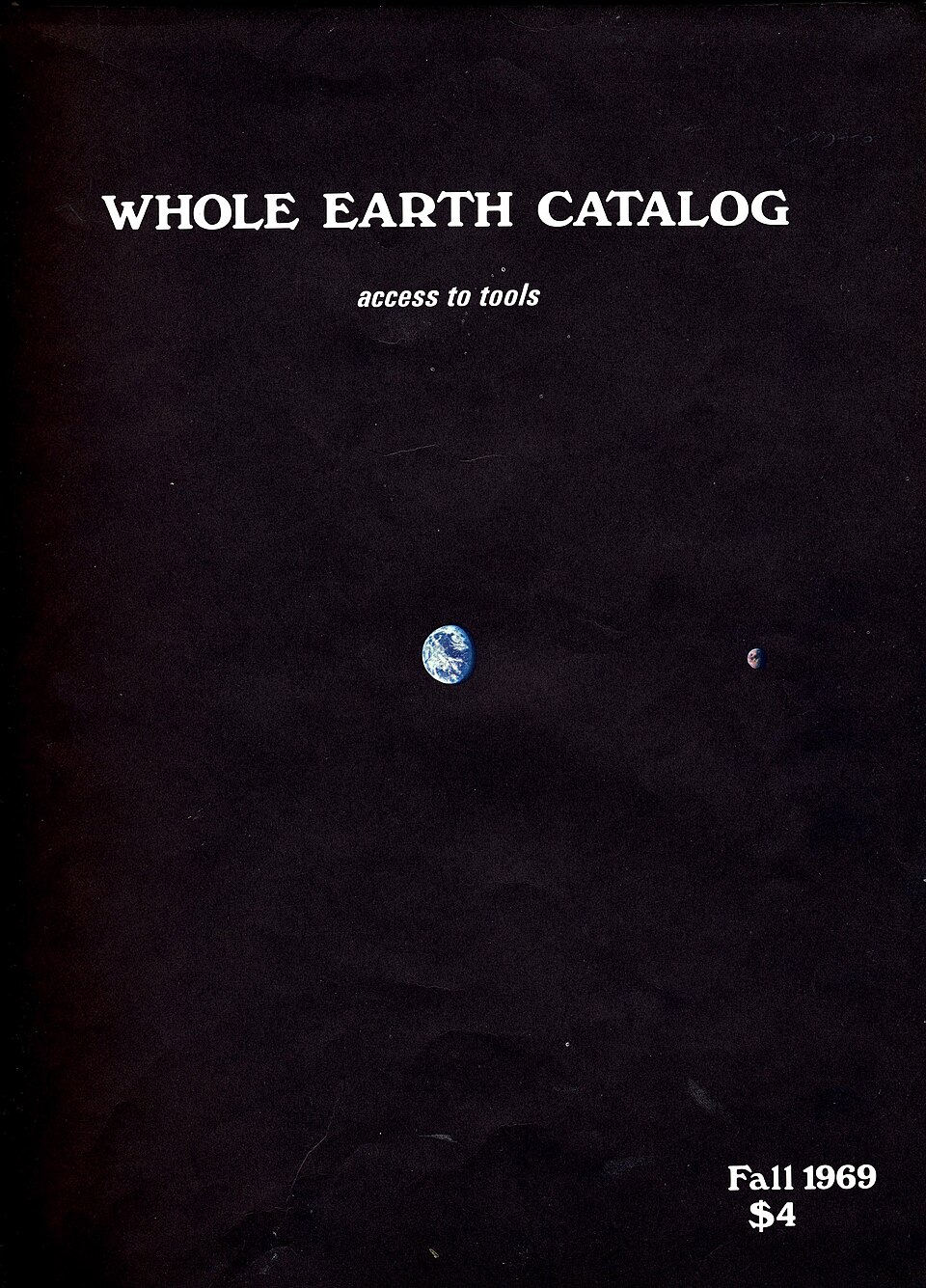
Jobs called it 'one of the bibles of my generation' and 'Google in paperback form, 35 years before Google came along' in his Stanford address, and took its farewell line 'stay hungry, stay foolish' as a personal motto he passed on to graduates.

Zen Mind, Beginner's Mind

Zen Mind, Beginner's Mind

Shunryu Suzuki·1970

Jobs said Zen was 'a deep influence in my life ever since' discovering it at Reed College, and once seriously considered abandoning his career to enter a Zen monastery in Japan before a teacher urged him to stay in business.

04

Be Here Now

Ram Dass·1971

Jobs said the book 'was profound, it transformed me and many of my friends,' directly tying his early psychedelic use to a spiritual search that led to his 1974 trip to India.

05

Cutting Through Spiritual Materialism

Chögyam Trungpa·1973

Jobs read this alongside Zen Mind, Beginner's Mind and Autobiography of a Yogi during his early immersion in Eastern spirituality at Reed College, part of the same documented cluster of books he 'devoured' there.

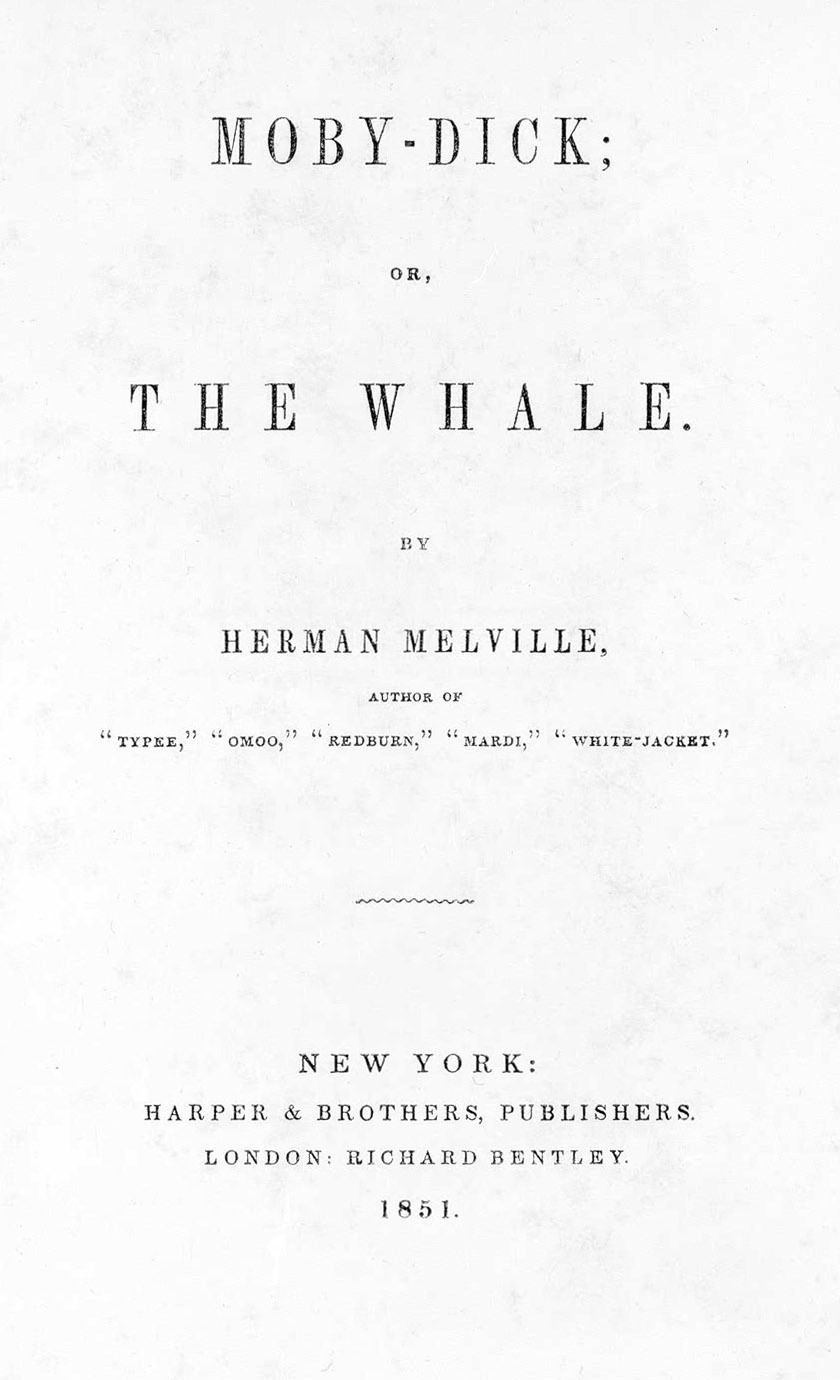
Moby-Dick

Moby-Dick

Herman Melville·1851

Jobs reread this novel repeatedly as a teenager and told Isaacson he identified with Captain Ahab's obsessive pursuit, a detail biographers connect to his own single-minded drive.

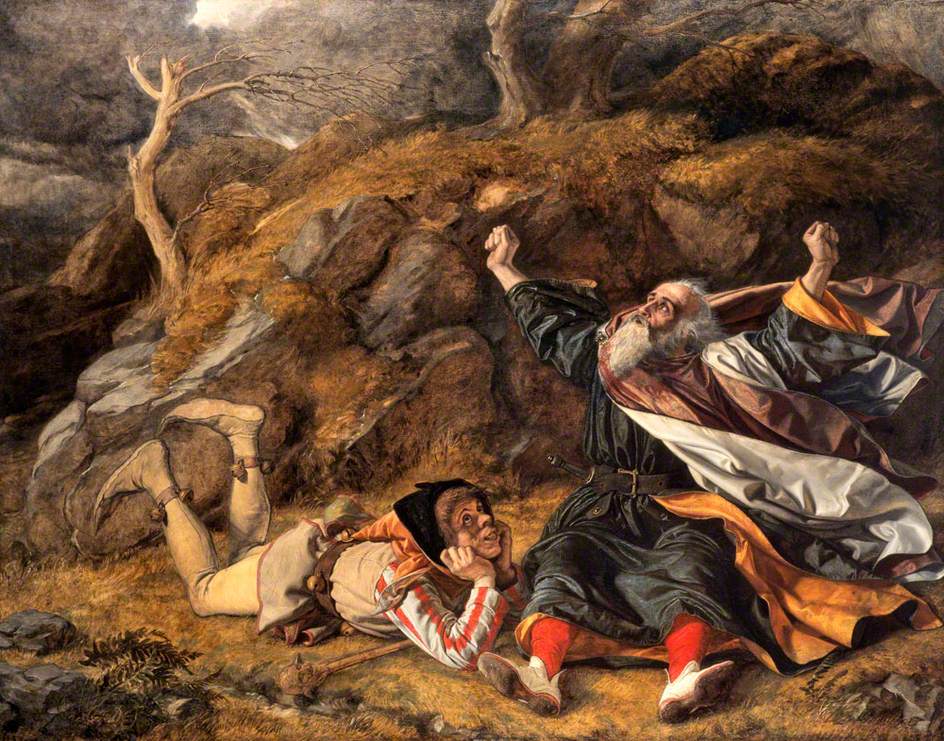
King Lear

King Lear

William Shakespeare·c. 1605

Jobs told Isaacson directly, 'I loved King Lear,' marking the start of what Isaacson calls his literary awakening in his last two years of high school.

08

Diet for a Small Planet

Frances Moore Lappé·1971

Jobs said reading this book at Reed was the point when 'I pretty much swore off meat for good,' directly crediting it with starting his lifelong vegetarian and fasting experiments.

09

The Innovator's Dilemma

Clayton M. Christensen·1997

Jobs called this book 'deeply' influential and applied its warning about inventors failing to see past their own creations directly to Apple's decision to let the iPhone cannibalize the iPod.

10

The Poetry of Dylan Thomas

Dylan Thomas·mid-20th century collected editions

Isaacson describes Jobs's late-teens 'intellectual flowering' as including a love of Dylan Thomas's verse, praised by a biographer for its 'striking new forms and unerringly popular touch.'

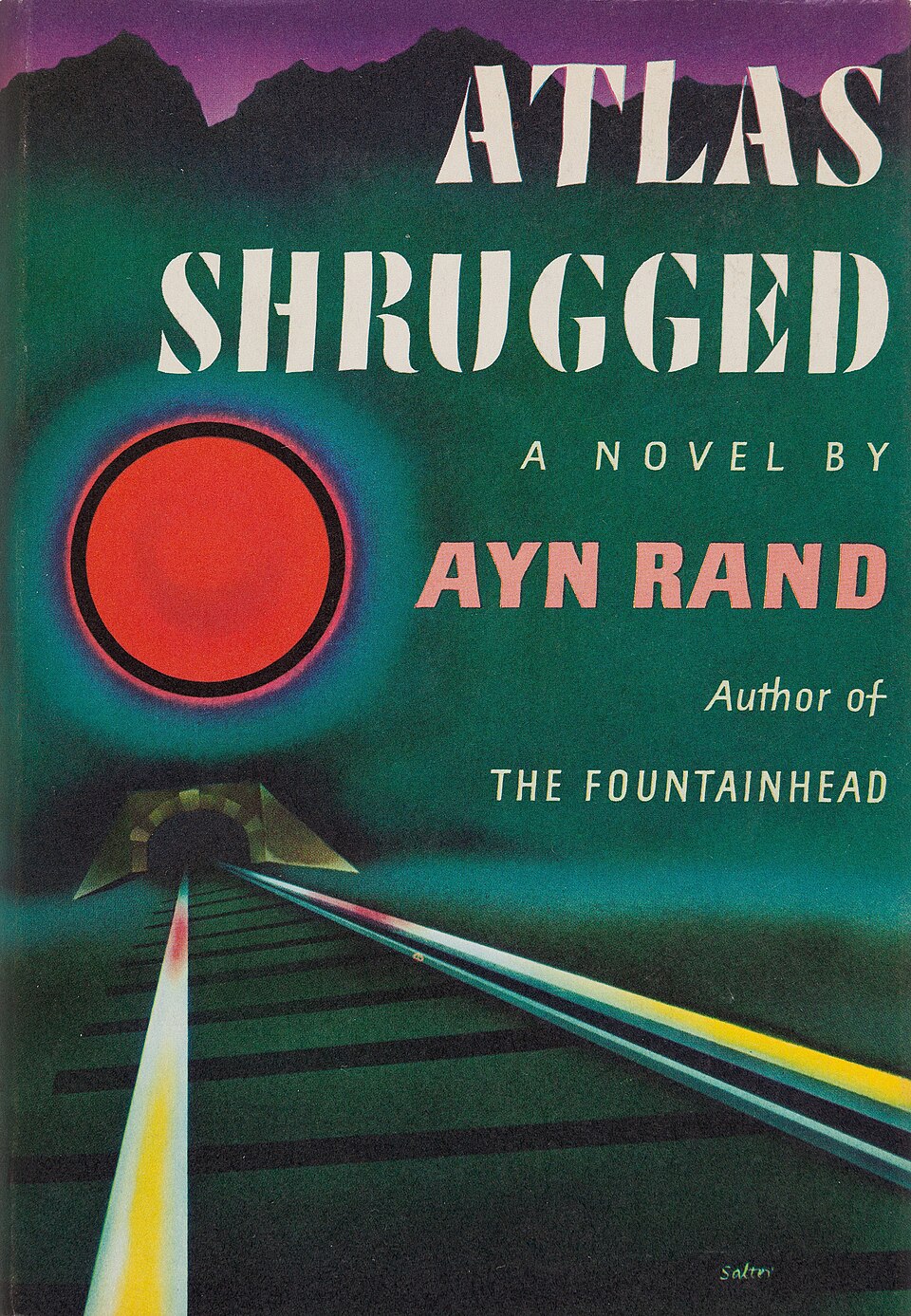
Atlas Shrugged

Atlas Shrugged

Ayn Rand·1957

The novel appears repeatedly on aggregated lists of Jobs's reading, but no interview or biographical anecdote records Jobs discussing it directly, so its personal significance to him remains unverified.

12

1984

George Orwell·1949

Secondary sources claim Jobs called it one of his favorite novels and link it to Apple's famous '1984' Super Bowl ad, but this rests on aggregated lists rather than a documented interview or biographical quotation.

13

Do Not Go Gentle Into That Good Night

Dylan Thomas·1951

A single secondary blog names this specific poem as Jobs's favorite, tying its 'rage against the dying of the light' to his resistance to illness, but the claim does not trace to Isaacson or any primary Jobs statement.

14

Only the Paranoid Survive

Andrew S. Grove·1996

This title appears only on aggregated recommendation lists without any direct quotation or anecdote connecting Jobs personally to the book's ideas.

15

Inside the Tornado

Geoffrey A. Moore·1995

The book appears grouped with other business titles on curated lists, but the sources explicitly acknowledge no direct quotation from Jobs exists to confirm his personal engagement with it.

16

The Way of the White Clouds

Lama Anagarika Govinda·1966

This spiritual memoir appears only on aggregated reading lists tied to Jobs's general interest in Eastern spirituality, without any direct quotation or specific anecdote linking him to it.

17

Meetings with Remarkable Men

G.I. Gurdjieff·1963

Sources compiling Jobs's reading include this spiritual autobiography, but explicitly note the lack of any direct quotation from Jobs about it, leaving the connection speculative.

01

Ryoan-ji

Zen monks / Hosokawa Katsumoto·c. 1499

Jobs regarded this minimalist dry landscape rock garden as the pinnacle of aesthetic design and returned there repeatedly during his trips to Kyoto.

02

Kainchi Dham Ashram

Neem Karoli Baba·1974

Jobs made a pilgrimage to this Himalayan ashram seeking guru Neem Karoli Baba, a journey that deeply shaped his lifelong embrace of Eastern spirituality despite discovering the guru had died.

03

2101 Waverley Street

c. 1930

Jobs's understated 1930s red-brick Tudor home in Palo Alto, consciously chosen for its unpretentious, un-gated integration into a normal neighborhood.

Tawaraya Ryokan

Tawaraya Ryokan

Tawaraya·c. 1700

This historic, ultra-traditional inn served as Jobs's consistent sanctuary and primary base whenever he stayed in Kyoto.

05

Gallery Kabutoya

Matsuoka Haruo·1983

A commercial gallery in Tokyo's Ginza district where Jobs nurtured his passion for Japanese shin-hanga prints and purchased dozens of Kawase Hasui woodblocks.

06

Misoka-an Kawamichiya

c. 1705

Jobs's favorite soba noodle restaurant in Japan, which he frequented whenever he was in Kyoto, always ordering cold soba with tempura.

07

Sushiiwa

Ohnishi Toshiya·c. 1960

A destination sushi restaurant in Kyoto where Jobs ate lunch with his family on his final trip to Japan, praising the fatty tuna as the best sushi he had ever tasted.

Practices

Sources →
01

Robert Palladino's Calligraphy Class

Robert Palladino·1972–1973

After dropping out of Reed College, Jobs kept attending Robert Palladino's calligraphy class as an auditor, studying serif and sans-serif letterforms, spacing, and the history of typography purely for its own sake. He later said directly that this specific class was why the Macintosh shipped with multiple typefaces and proportionally spaced fonts, making it a rare case where he named a personal practice as the direct cause of a specific product feature.

02

Zen Meditation with Kobun Chino Otogawa

Kobun Chino Otogawa·c. 1974–2002

For roughly three decades Jobs sat zazen under the Soto Zen teacher Kobun Chino Otogawa at Haiku Zendo in Los Altos, at times taking several days off to sit for extended periods at Tassajara. Accounts describe him as one of the students who logged the most meditation hours and as someone who used the practice as a tool of sustained self-scrutiny, returning to sitting and calligraphy again in his final months.

03

Walking Meetings

c. 1980s–2010s

Jobs made walking his default setting for serious, one-on-one conversation — declining formal venues in favor of long walks, as when he proposed a walk instead of appearing on a panel with his biographer, and as he did regularly with Jony Ive while working through design decisions.

04

Structured Daily Routine at Apple

c. 1997–2011

In his later Apple years Jobs kept a fixed daily structure: mornings for face-to-face product and management meetings with no PowerPoint or formal agenda, afternoons in the design studio walking through prototypes with Jony Ive, and evenings reserved for simple vegan family dinners at a long wooden table, a pattern he described as deliberately eliminating distraction.

05

Bob Dylan Bootleg Listening

Bob Dylan·1965–1966 tour recordings

Jobs and Steve Wozniak hunted specifically for Dylan bootlegs around San Jose and Berkeley, and Jobs said he owned more than a hundred hours of Dylan's 1965–66 tour tapes, which he would listen to for hours in bed through headphones rather than speakers — a named, quantified listening habit rather than general fandom.

06

Beatles 'Strawberry Fields Forever' Session Bootlegs

The Beatles·1966–1967 sessions

Jobs studied a bootleg of the evolving studio takes of 'Strawberry Fields Forever' as an explicit working model for how Apple should build products: start with a version, then refine repeatedly through successive iterations until the result provoked the reaction 'Wow, how did they do that?' — a specific analogy he used, not a general love of the band.

Barefoot Walking

Barefoot Walking

c. 1970s–2010s

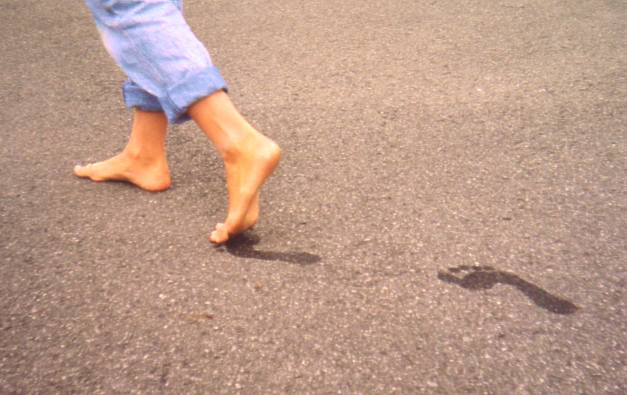
Multiple firsthand accounts describe Jobs habitually going without shoes even in ostensibly professional or journalistic settings, such as leading reporters on an evening walk around Palo Alto barefoot, a specific detail acquaintances recalled as characteristic of him rather than incidental.

LSD Use

LSD Use

c. late 1960s–early 1970s

Jobs described taking LSD as one of the most important experiences of his life, saying it showed him 'another side to the coin' and reinforced his priority of building great things over making money — a specific claim about how the experience shaped his values, though it rests on a single widely repeated quote rather than a documented ongoing practice.