← Steve Jobs

Practices

8 entries, with sources

01

Robert Palladino's Calligraphy Class

Robert Palladino·1972–1973

After dropping out of Reed College, Jobs kept attending Robert Palladino's calligraphy class as an auditor, studying serif and sans-serif letterforms, spacing, and the history of typography purely for its own sake. He later said directly that this specific class was why the Macintosh shipped with multiple typefaces and proportionally spaced fonts, making it a rare case where he named a personal practice as the direct cause of a specific product feature.

In his own 2005 Stanford commencement address, Jobs describes dropping in on Palladino's calligraphy class and learning about serif/sans-serif type, spacing, and typographic beauty, and states that this is why the Mac had proportionally spaced fonts. MacRumors and Reed College's own tribute to Palladino corroborate that Jobs was his student and later publicly credited the class.
02

Zen Meditation with Kobun Chino Otogawa

Kobun Chino Otogawa·c. 1974–2002

For roughly three decades Jobs sat zazen under the Soto Zen teacher Kobun Chino Otogawa at Haiku Zendo in Los Altos, at times taking several days off to sit for extended periods at Tassajara. Accounts describe him as one of the students who logged the most meditation hours and as someone who used the practice as a tool of sustained self-scrutiny, returning to sitting and calligraphy again in his final months.

Cuke.com documents the Haiku Zendo relationship, describes Jobs as among the most dedicated sitters, and notes multi-day retreats at Tassajara devoted to introspection. Tricycle's account of the thirty-year Jobs–Kobun friendship confirms his regular attendance and describes his return to meditation and calligraphy near the end of his life.

03

Walking Meetings

c. 1980s–2010s

Jobs made walking his default setting for serious, one-on-one conversation — declining formal venues in favor of long walks, as when he proposed a walk instead of appearing on a panel with his biographer, and as he did regularly with Jony Ive while working through design decisions.

CNBC recounts Isaacson's story of Jobs proposing a walk in place of a panel appearance, describing this as his preferred format for serious talks. Misra's essay and Forbes, both drawing on Isaacson, describe recurring walks with Jony Ive used specifically to brainstorm and evaluate product design.

04

Structured Daily Routine at Apple

c. 1997–2011

In his later Apple years Jobs kept a fixed daily structure: mornings for face-to-face product and management meetings with no PowerPoint or formal agenda, afternoons in the design studio walking through prototypes with Jony Ive, and evenings reserved for simple vegan family dinners at a long wooden table, a pattern he described as deliberately eliminating distraction.

Forbes, drawing on Isaacson's interviews, lays out this specific morning/afternoon/evening structure and quotes Isaacson on Jobs being 'exceptionally rigorous about eliminating what he deemed distractions.' AllAboutSteveJobs corroborates the evening pattern with a Time magazine account of a strict vegan family dinner at his Palo Alto home.

05

Bob Dylan Bootleg Listening

Bob Dylan·1965–1966 tour recordings

Jobs and Steve Wozniak hunted specifically for Dylan bootlegs around San Jose and Berkeley, and Jobs said he owned more than a hundred hours of Dylan's 1965–66 tour tapes, which he would listen to for hours in bed through headphones rather than speakers — a named, quantified listening habit rather than general fandom.

Hypebeast, citing Isaacson, recounts Wozniak's memory of the bootleg hunts and quotes Jobs on owning over a hundred hours of tour tapes and buying headphones specifically to listen to them in bed. Cult of Mac and a compiled list of his personal iPod library confirm he kept the full Bootleg Series and named a specific favorite song.

06

Beatles 'Strawberry Fields Forever' Session Bootlegs

The Beatles·1966–1967 sessions

Jobs studied a bootleg of the evolving studio takes of 'Strawberry Fields Forever' as an explicit working model for how Apple should build products: start with a version, then refine repeatedly through successive iterations until the result provoked the reaction 'Wow, how did they do that?' — a specific analogy he used, not a general love of the band.

Hypebeast, citing Isaacson, quotes Jobs describing the months-long back-and-forth refinement captured in the bootleg and explicitly comparing it to Apple's own iterative product process. Cult of Mac corroborates that Jobs framed the Beatles' continual refinement as a model he tried to emulate.

07
Barefoot Walking
Wikimedia Commons

Barefoot Walking

c. 1970s–2010s

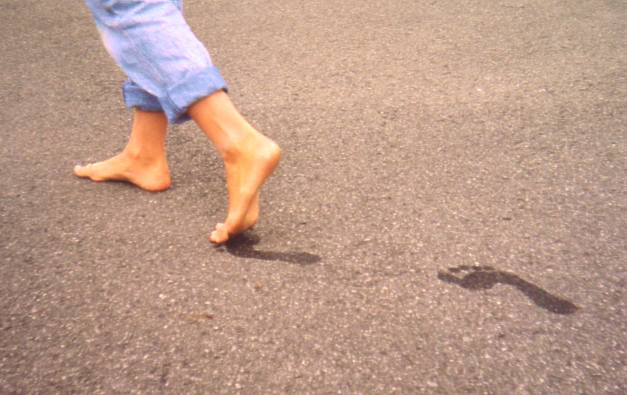
Multiple firsthand accounts describe Jobs habitually going without shoes even in ostensibly professional or journalistic settings, such as leading reporters on an evening walk around Palo Alto barefoot, a specific detail acquaintances recalled as characteristic of him rather than incidental.

CNBC quotes his longtime friend Robert Friedland recalling Jobs as 'always walking around barefoot.' AllAboutSteveJobs recounts a Time magazine visit in which Jobs specifically leads reporters on a barefoot walk around Palo Alto after dinner.

08
LSD Use
Wikimedia Commons

LSD Use

c. late 1960s–early 1970s

Jobs described taking LSD as one of the most important experiences of his life, saying it showed him 'another side to the coin' and reinforced his priority of building great things over making money — a specific claim about how the experience shaped his values, though it rests on a single widely repeated quote rather than a documented ongoing practice.

The quote attributed to Jobs and traced to Isaacson's biography appears via a Goodreads compilation rather than a primary interview transcript, giving it thin, secondary sourcing despite wide repetition.