← Steve Jobs

Technology

15 entries, with sources

01

Sony Walkman

Sony (Akio Morita and team)·1979

Jobs treated the original Sony Walkman not as a consumer gadget but as a masterclass in how a small, focused piece of technology could reshape everyday habits. He dissected both the hardware and the decision to ship it without market research as a template for how he later wanted Apple to operate, and two decades later he was still described as obsessively studying it while developing the iPod.

Multiple accounts describe Jobs traveling to Japan, obtaining a Walkman directly from Sony co-founder Akio Morita, and immediately taking it apart rather than simply listening to music, scrutinizing every mechanical and layout decision. John Sculley recalls Morita giving both him and Jobs one of the first Walkmans, with Jobs instantly fascinated by the fit and finish, and touring Sony's spotless factories. Business writers report that Jobs later echoed Morita's line about market research being unable to predict the Walkman's success, and that he obsessively studied the device as a benchmark while creating the iPod.
02
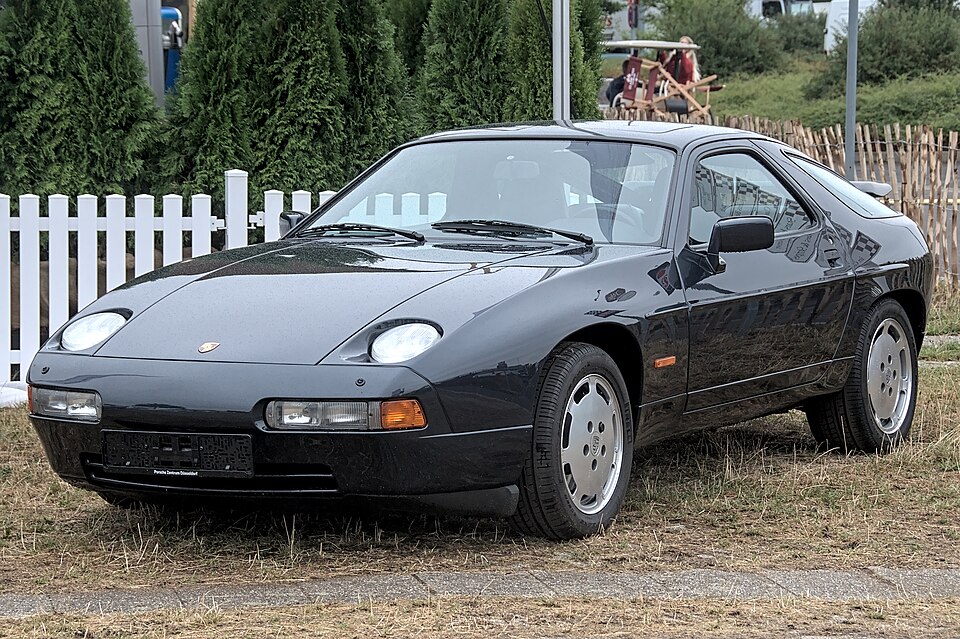
Porsche 928
Alexander Migl · CC BY-SA 4.0

Porsche 928

Porsche·late 1970s–early 1980s

Jobs owned and drove a Porsche 928 in the early 1980s and used it as an explicit design metaphor when arguing for the Macintosh's aesthetic, insisting the computer should look 'more like a Porsche' than a boxy appliance. For Jobs the 928 was a reference exemplar of industrial design whose voluptuous curves he wanted translated into the plastic and metal shell of a personal computer.

Andy Hertzfeld's first-hand account, relayed by Torque News, describes a March 1981 discussion in which Jobs and James Ferris debated the Macintosh's industrial design; Jobs rejected Beetle and Ferrari comparisons and declared it 'should be more like a Porsche,' specifically referencing his own Porsche 928. Hertzfeld notes he found the comparison pompous but was struck by Jobs's passion and discrimination between design philosophies. Automotive coverage separately lists Jobs among the 928's notable owners.

03

Apple Keynote

Apple (developed for Steve Jobs)·2001 (alpha), 2003 public release

Keynote was originally built as a private, custom application for Jobs himself, designed to match his exacting demands for slide aesthetics and motion. He called it his favorite piece of software, using it to orchestrate Apple's major product unveilings once it matured, treating it as an extension of his stagecraft.

Business Insider reports Keynote was 'originally built for one customer: Steve Jobs,' created because he refused to use standard boardroom presentation software. Cult of Mac describes how a working alpha existed by early 2001, used to unveil the iPod. Geekpark's profile states the application was built entirely around Jobs's requirements and only released publicly once it reached a level of polish he considered 'magical.' Jobs is directly quoted praising Keynote as being 'like having a professional graphic design department' produce your slides.

04

Concurrence

Lighthouse Design·mid-1990s

Before Apple built Keynote, Jobs relied on Concurrence, a NeXTSTEP presentation application from Lighthouse Design, using it for years as his main tool for slide shows and internal demos. His familiarity with it was strong enough that a former Sun CEO later teased him that Apple's Keynote looked 'identical' to Concurrence.

Jonathan Schwartz, former CEO of Sun Microsystems, recounts a phone call in which Jobs accused Sun of copying Apple's ideas; Schwartz retorted that Keynote looked 'identical' to Concurrence, a Lighthouse Design product for NeXTSTEP that Sun had acquired, and noted that Jobs had 'used Concurrence for years.' This first-hand account directly ties Jobs personally to sustained use of the software and its later influence on Keynote's design.

05

Sony CD Walkman

Sony (Akio Morita and team)·1984

When Morita handed Jobs one of the first CD Walkman units just before its commercial launch, Jobs was struck by how it encapsulated the 'spirit of Japanese manufacturing'—compact precision and impeccable finish—and treated it as a contemporary reaffirmation of the lessons he had drawn from the cassette Walkman.

Accounts describe Morita personally giving CD Walkman units to Jobs and Sculley just before the November 1984 launch. Sculley recalls Jobs being immediately struck by the design, feeling it 'encapsulated the spirit of Japanese manufacturing,' and peppering Morita with questions about the design process and Morita's personal involvement, which Jobs saw as validating his own hands-on approach to leadership at Apple.

06

QuickTime Player

Apple·late 1990s

After returning to Apple, Jobs refused to use Microsoft PowerPoint and instead repurposed QuickTime Player, Apple's media playback utility, as an improvised presentation engine, sequencing images and transitions to mimic the photographic sales presentations he admired. QuickTime directly seeded the custom tool that became Keynote.

Cult of Mac and Geekpark recount that Jobs called PowerPoint a 'crude yet broken tool' and refused to run it on Windows, so he and his team used QuickTime Player to assemble slide sequences for his 1998 return-era Macworld keynotes. Geekpark describes QuickTime as the 'distant ancestor' of Keynote, noting Jobs continued using it for talks even while a dedicated application was being built for him.

07

Michell GyroDec MK1

Michell Engineering·early 1980s

Jobs used a Michell GyroDec MK1 belt-drive turntable as the centerpiece of his early-1980s Woodside hi-fi system, its exposed brass-weighted platter and skeletal frame matching his taste for visible, functional engineering in an otherwise nearly empty living room.

The famous 1982 Diana Walker photograph shows Jobs seated on the floor of an almost empty room with an elaborate stereo as the dominant object. Hi-fi writers analyzing the image identify the turntable as a Michell GyroDec MK1, distinguishable by its suspended platter and skeletal frame, cross-referenced against known audio equipment of the period.

08

Acoustat Model 3

Acoustat·late 1970s–early 1980s

Jobs's Woodside listening room featured a pair of Acoustat Model 3 electrostatic loudspeakers, large planar panels producing sound without conventional woofers or tweeters, chosen for sonic transparency over mainstream box-speaker design and standing as near-sculptural objects in his sparse home.

The Diana Walker photograph shows two tall white-clothed panels behind Jobs, identified by multiple hi-fi commentators as Acoustat Model 3 speakers based on construction and acoustic-cloth details distinguishing them from the Monitor series. A design historian describes the speakers as coming from a Florida-based electrostatic specialist producing sound via electrostatic charge with no woofers or tweeters.

09

Threshold FET-One

Threshold (Nelson Pass)·circa 1979–1981

Jobs's system included a Threshold FET-One preamplifier, a Nelson Pass design offering dedicated RIAA equalization for both moving-magnet and moving-coil cartridges, indicating he paired his exotic speakers and turntable with serious boutique electronics rather than an integrated receiver.

Hi-fi blogs analyzing the Walker photograph identify the slim control unit as a Threshold FET-One preamplifier, describing its FET-based circuits and RIAA equalization, and note it was paired with Threshold Stasis-1 monoblocks to drive the demanding Acoustat electrostatic load.

10

Threshold Stasis-1

Threshold (Nelson Pass)·1979–1981

Jobs's stereo used a pair of Threshold Stasis-1 monoblock power amplifiers, high-current, low-distortion units built to drive demanding electrostatic loads, reflecting a taste for robust, over-engineered amplification even in parts of the system invisible in normal use.

Audio reconstructions specify Jobs used two Threshold Stasis-1 monoblocks alongside the FET-One preamp, produced roughly between 1979 and 1981, and note they were well suited to driving Acoustat speakers' challenging load, a detail consistently repeated across independent hi-fi commentaries analyzing the same photograph.

11

Denon TU-750S

Denon·early 1980s

A Denon TU-750S digital tuner completed Jobs's Woodside system, a comparatively modest component next to the exotic turntable and speakers, suggesting he reserved his most lavish investment for analog playback while handling FM broadcast reception with reliable, mid-priced equipment.

Articles examining Jobs's stereo mention the setup was completed by a Denon TU-750S tuner described as relatively affordable compared to the rest of the system; Dutch coverage citing cost estimates for recreating the system highlights the tuner's modest price relative to the Michell, Threshold, and Acoustat gear.

12
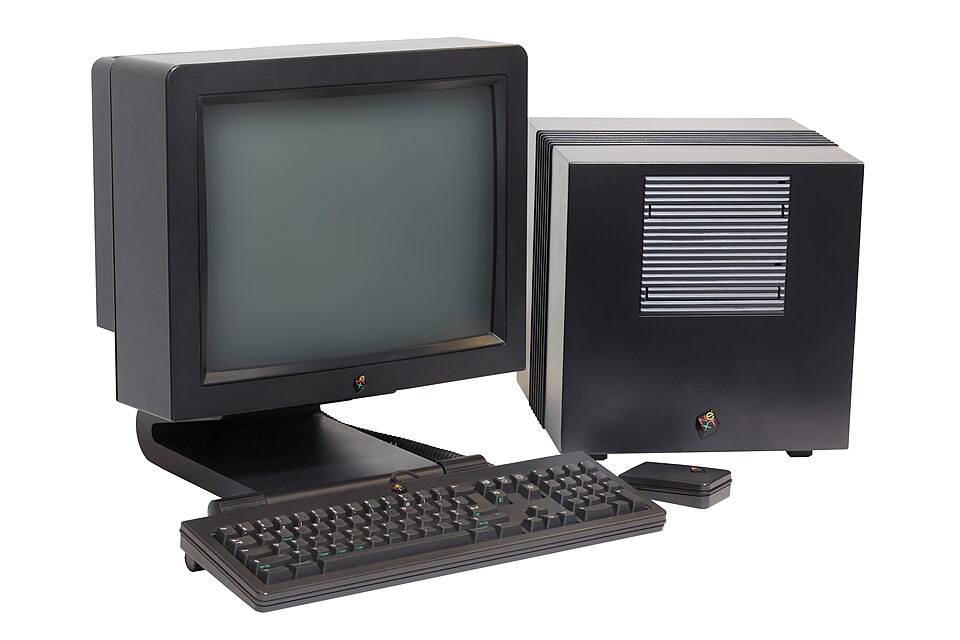
NeXTcube
Rama & Musée Bolo · CC BY-SA 2.0 fr

NeXTcube

NeXT·1988–1993

During his years away from Apple, Jobs used NeXTcube workstations as his primary computing environment, both as CEO of NeXT and as a daily user, treating the black magnesium cube and its NeXTSTEP operating system as a proving ground for his ideals of hardware and software design.

A design history describes the NeXT Computer/NeXTcube as a 'revolutionary, high-end workstation' Jobs created to demonstrate his vision free of shareholder interference, featuring a black cube chassis and advanced Unix-based graphical OS. Separately, first-hand testimony confirms Jobs personally relied on NeXTSTEP applications such as Concurrence for years, indicating sustained daily use of the platform rather than mere corporate ownership.

13
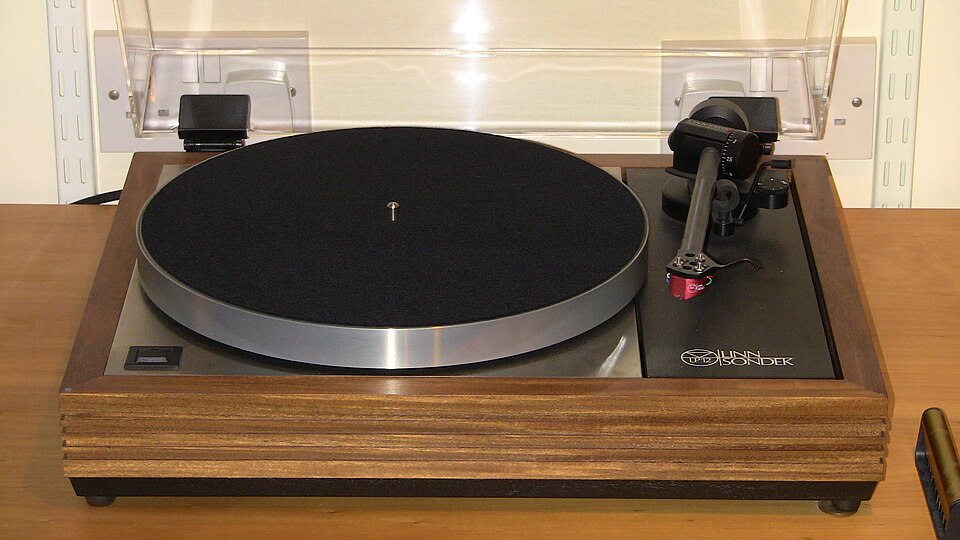
Linn Sondek LP12
RayL11111111 · CC BY-SA 3.0

Linn Sondek LP12

Linn Products·1970s

Before adopting the Michell GyroDec, Jobs is said to have used a Linn Sondek LP12, a cult audiophile turntable known for its tunability, in the same Woodside listening space later photographed by Diana Walker.

Hi-fi blogs reconstructing Jobs's stereo mention in passing that he used a Linn Sondek before switching to the Michell GyroDec MK1 seen in the 1982 photograph, but this claim is not independently corroborated by photographic evidence of the Linn itself and rests on secondary blog assertions rather than a documented source.

14
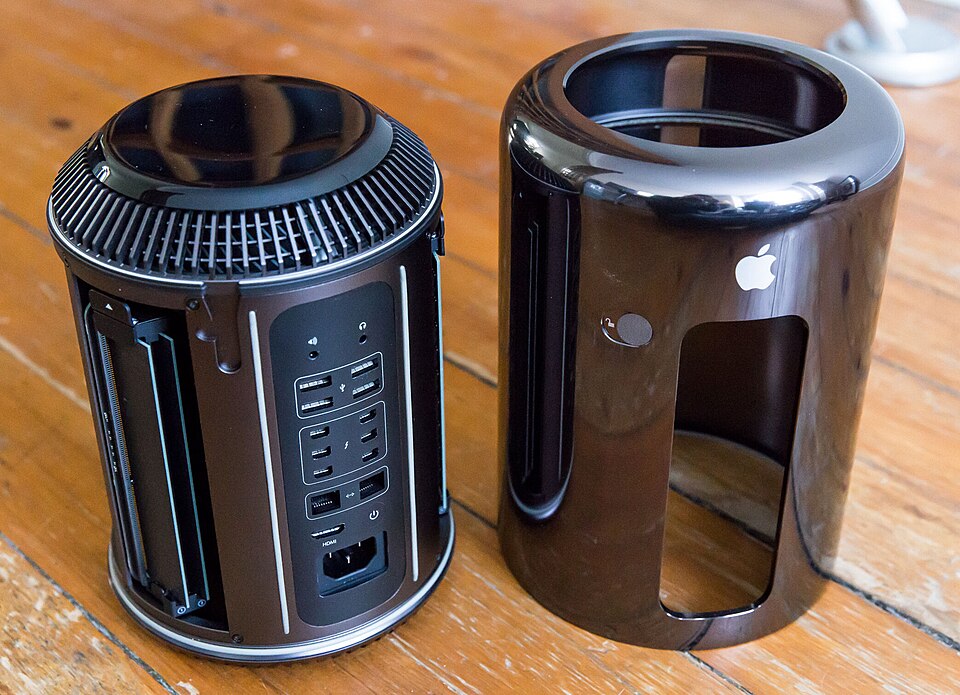
Mac Pro
Uadro · CC BY-SA 4.0

Mac Pro

Apple·mid-2000s–early 2010s

In his later years, Jobs is said to have primarily used a Mac Pro tower paired with the largest Apple display available, both at home and at work, suggesting he favored a powerful, stationary desktop setup over laptops or tablets for his own daily computing.

An informal online discussion among Mac enthusiasts states Jobs was 'a desktop user primarily' with 'a Mac Pro and the largest display Apple made at home and at work,' and that images of him carrying laptops or tablets were rare. This is community-sourced observation rather than biographical documentation.

15
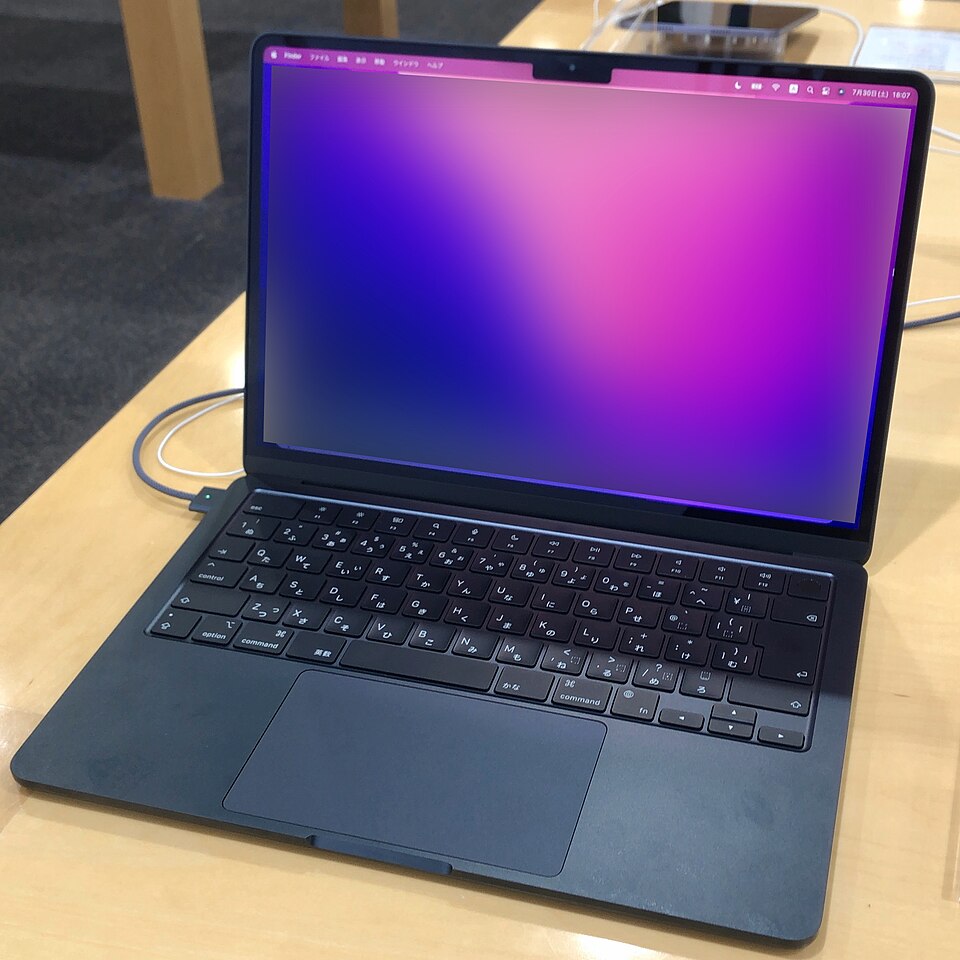
MacBook Air
KKPCW(Kyu3) · CC BY-SA 4.0

MacBook Air

Apple·late 2000s

Despite being primarily a desktop user, Jobs is said to have used a 13-inch MacBook Air for at least some years, suggesting that when he did carry a portable computer, he chose Apple's thinnest, most minimal notebook.

The same informal online discussion notes 'he definitely used a MacBook Air for at least some years' and that he was photographed a few times with a '13" Air,' based on community observation of circulating images rather than a documented biographical source.